Migraine Journal: A Practical Template for Daily Use
Migraine journal made simple: use a practical daily template, record headache-free days, and share a clearer picture with your doctor. Start tracking today.
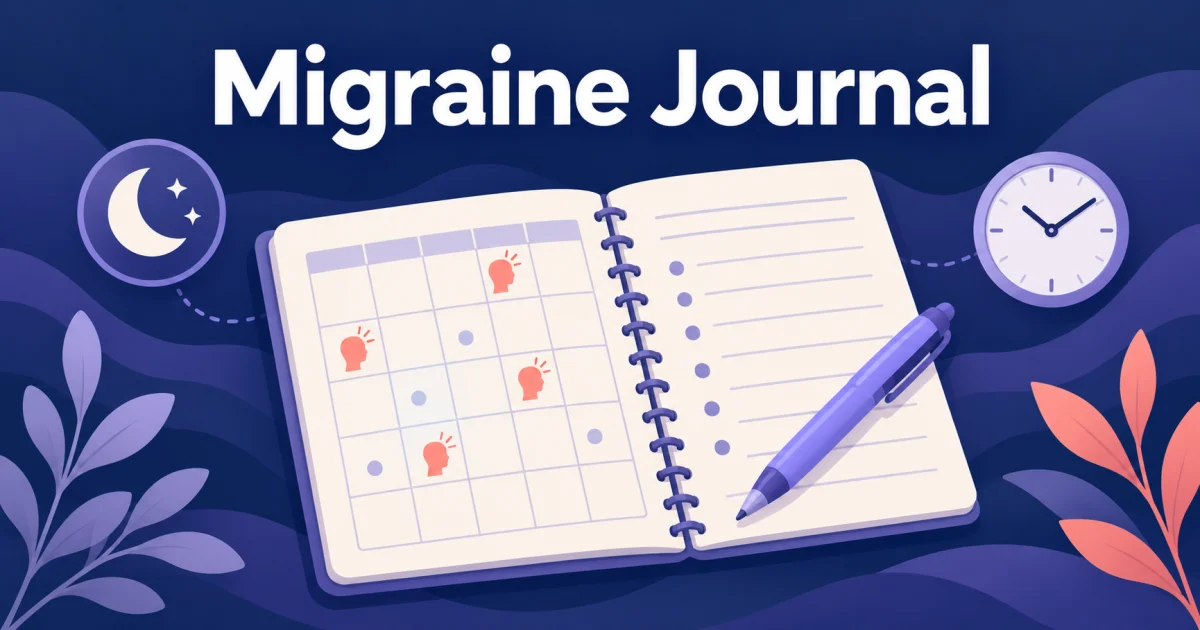
A migraine journal can help when “I have had a lot of headaches lately” is the most accurate answer you can give at an appointment. The aim is to preserve a few useful facts while they are fresh, without turning your day into a health-data project. A migraine journal is a dated record of head pain, other symptoms, medicines used, and the effect on daily life.
What belongs in a migraine journal?
A useful migraine journal records when symptoms happened, what they felt like, and how they affected your day. Add context only when it helps answer a question you or your clinician have.
The American Migraine Foundation’s guide to headache journals describes paper, spreadsheets, and phone apps as valid options and encourages a manageable routine. Choose the format you will actually use. A detailed notebook that stays unopened is less useful than a brief, consistent record.
Start with these fields:
| Field | A useful entry |
|---|---|
| Date and times | Head pain began at 10:30; ended around 18:00 |
| Pain | Moderate, pulsing, left temple |
| Other symptoms | Nausea, light sensitivity, difficulty concentrating |
| Function | Left work early; could eat a small meal |
| Medicines used | Exact name, dose, time, and what happened afterward |
| Context | Slept later than usual; lunch delayed |
| Uncertainty | End time estimated; morning details not recorded |
Describe symptoms rather than assigning every day a diagnosis. A clinician can help you understand the difference between migraine and other headaches. You do not need to know the correct medical label before you begin.
How can you use a daily migraine journal template?
Use the same short structure each day, adding detail when symptoms occur. Copy the following template into a notebook, a document, or a notes field and remove any items your clinician does not need.
Date:
Head pain today: yes / no / not recorded
Start and end times: exact / estimated / ongoing
Pain location, character, and severity:
Other symptoms and their times:
Effect on work, school, home life, or activity:
Medicines: name, dose, time; response or side effects
Optional context: sleep, meals, caffeine, stress, cycle timing
What changed from my usual day?
Anything uncertain or missing?
Here is a hypothetical example:
Date: 4 October
Head pain today: yes
Start/end: 10:30 to about 18:00; end time estimated
Pain: left temple, pulsing, moderate at first; worse at 13:00
Other symptoms: nausea at 11:00; light uncomfortable at 12:00
Function: stopped screen work at 13:30; missed a meeting
Medicines: copied exact name, dose, and time from my own record
Response: pain felt lower at 15:00; still could not work normally
Context: woke later than usual; lunch delayed
Uncertain: cannot remember whether nausea began before pain
The uncertainty line matters. “About 18:00” communicates something different from a precise timestamp. If you did not record a medicine’s dose, check the packaging or your own prescription record rather than guessing. Keep a place to add information later, but mark it as recalled.
Why record headache-free days?
A headache-free entry shows that you checked in and had no head pain that day. An empty date cannot tell a reader whether you felt well, forgot to log, or were too unwell to write.
A minimal entry might be: “5 October: no head pain; tired in the afternoon; no headache medicine.” If you felt entirely well, “no head pain or other symptoms” is enough. If you had symptoms without head pain, describe those separately instead of calling the whole day symptom-free.
For your own review, this creates a fairer comparison. Suppose you wrote “coffee” on every headache day but never recorded coffee on other days. You would not know how often you drank it without a headache. A few notes on non-headache days can fill that gap. This is a practical way to avoid a misleading impression, not a method of diagnosing a trigger.
Head pain also captures only part of an attack. Symptoms can occur before or after the headache phase. If fatigue or concentration problems persist, record their timing and effect without automatically counting them as another headache.
How are headache days, attacks, and medication days different?
A headache day is a calendar day with head pain; an attack is an episode that may extend across days. A medication-use day is a calendar day on which a particular medicine was used, while a dose is an individual amount taken.
For a simple hypothetical counting example, head pain that begins Monday evening and continues into Tuesday is two headache days, even if you describe it as one continuous episode. Two doses of the same headache medicine on Monday are two doses but one use day for that medicine. Keep both details so your clinician can interpret the record.
A compact monthly summary can look like this:
Calendar period:
Days recorded:
Headache days:
Headache-free days:
Days not recorded:
Days with symptoms but no head pain:
Medication-use days, listed separately by medicine:
Days when work, school, or normal activities were limited:
Do not add medicine-specific use-day totals together to estimate unique days if you sometimes used more than one medicine on the same date. Keep the dates available. ICHD-3 medication-overuse headache criteria depend partly on use days and medication type; a count alone cannot establish that diagnosis. Ask a clinician about frequent use rather than changing prescribed medicines because of a diary calculation.
How should you review possible triggers?
Review a specific repeated observation, including days when the suspected exposure happened without an attack. A diary can identify a relationship worth discussing, but it cannot by itself separate cause, coincidence, and an early symptom.
For example, write “neck felt stiff at 08:00; head pain began at 11:00,” rather than “neck stiffness triggered migraine.” AMF explains that neck pain and food cravings can be prodrome symptoms, meaning an attack may already be developing before the head pain begins.
Choose one question at a time: “Do my headaches cluster after a change in sleep timing?” is easier to review than a growing list of every meal, smell, and activity. Record relevant context on comparable days and leave room for exceptions. See our guide to common migraine triggers for context, and our caffeine tracking guide for an example of recording amount and timing.
Finding no clear pattern is a valid result. It is not evidence that you logged badly or failed to avoid something.
What if keeping a journal feels like too much?
Reduce the entry to the facts you can manage, then ask your clinician which details matter most. The journal should support care rather than become another source of pressure.
On a difficult day, record the date, head pain yes or no, approximate timing, functional impact, and any medicines used. Add extra detail after symptoms ease if you can recall it, and label it as an estimate. A reminder tied to an existing habit, such as charging your phone, may be easier to maintain than a rigid schedule.
Before an appointment, turn the record into the short doctor summary in this guide. Calma offers a place to log attacks and symptoms and export PDF or CSV reports; observations that do not have a dedicated field can go in notes. Review an export for missing dates and unclear entries before sharing it.
A practical diary begins with today’s facts. If headaches are frequent, severe, changing, or disrupting daily life, book a medical review rather than waiting for a perfect record.
Download on the App StoreFrequently Asked Questions
These answers address common choices when starting a journal.
What should I put in a migraine journal?
Record the date, headache start and end times, pain severity, other symptoms, and how the day was affected. Add the names and times of any medicines taken, plus brief context such as sleep or caffeine when relevant.
Should I record headache-free days?
A brief headache-free entry distinguishes a day without head pain from a missing entry. Note any other symptoms or medicines used, because a headache-free day is not always symptom-free.
How long should I keep a migraine journal?
Ask your clinician what observation period they need. Starting now is useful even if an appointment is soon; there is no guaranteed number of weeks in which a personal trigger pattern will appear.
Does a migraine journal prove what caused an attack?
No. A journal can show that an exposure and an attack occurred close together, but that does not prove the exposure caused the attack. Compare similar days without attacks and discuss repeated observations with your clinician.
Sources
These clinical resources inform the tracking guidance; the templates and examples above are original and illustrative.
- American Migraine Foundation. Headache Journals: Tracking Your Migraine.
- American Migraine Foundation. The Phases of Migraine.
- International Headache Society. ICHD-3: Medication-overuse headache.
- American Migraine Foundation. The Science Behind Migraine Triggers.
Related Articles

Caffeine and Migraine: Track Your Amount and Timing
Caffeine and migraine have a complex link. Learn how amount, timing, and withdrawal affect your diary, then track observations to discuss with a doctor.
Hormonal Migraine: Track Your Menstrual Cycle Pattern
Hormonal migraine can follow menstrual timing. Learn the cycle window, keep a practical symptom diary, and bring clearer questions to your doctor. Start today.

Migraine Appointment: Prepare a Useful Doctor Summary
Migraine appointment coming up? Use a practical doctor-summary template, organize symptoms and medicine records, and prepare questions. Start your diary today.