Chronic Migraine: Criteria, Symptoms, and Tracking
Understand chronic migraine criteria, count headache days and migraine features accurately, and prepare a useful diary for a conversation with your clinician.
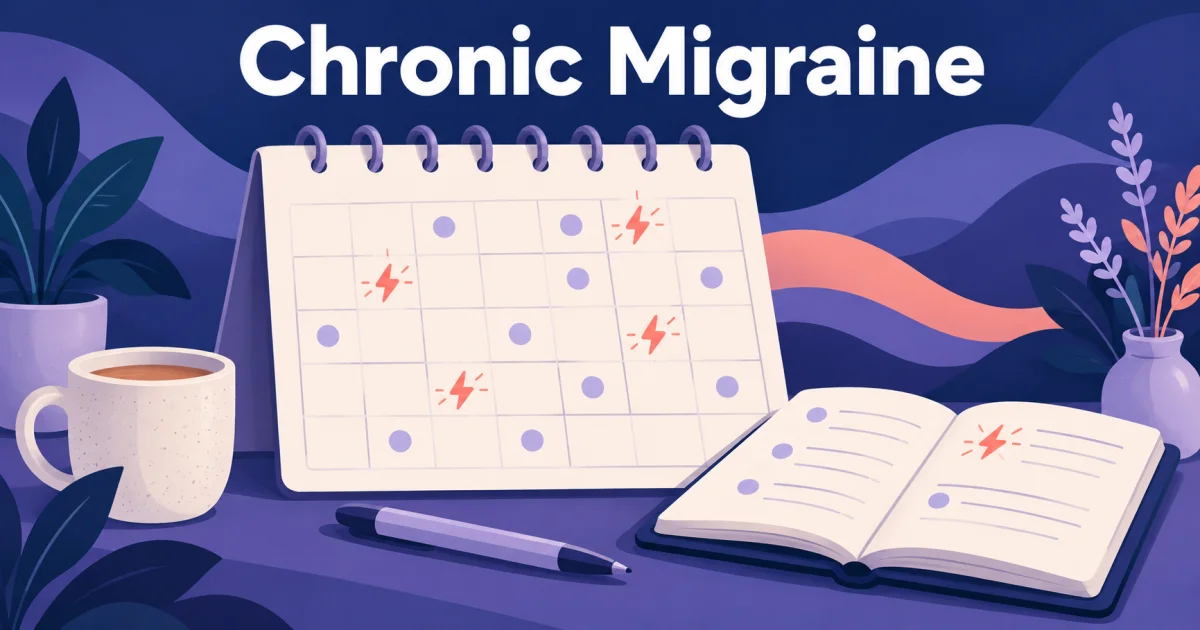
Chronic migraine is a clinical diagnosis based partly on how often headache occurs, not simply on how painful a single attack feels. When symptoms occupy much of a month, the difference between “attacks” and “headache days” becomes important.
This guide explains the criteria and useful records for care. A diary or app cannot diagnose chronic migraine, and you do not have to meet this definition before asking for help.
What are the criteria for chronic migraine?
The International Classification of Headache Disorders, third edition specifies headache on 15 or more days per month for more than three months. On at least eight days per month for more than three months, specified migraine-related criteria must also be met.
Those eight days are assessed through features meeting migraine-without-aura or migraine-with-aura criteria, or a specified history of migraine symptoms responding to certain migraine medicines. The criteria also require previous qualifying migraine attacks and that another diagnosis does not better explain the symptoms.
This is why two numbers alone cannot settle the diagnosis. A clinician needs the symptom history, pattern over time, treatment history, and any evidence pointing to another cause. Do not use medicine response as a self-directed diagnostic experiment.
| Part of the assessment | What to bring |
|---|---|
| Headache frequency | Dates with any head pain, including milder days |
| Migraine-related days | Symptoms such as nausea, activity-related worsening, or light and sound sensitivity |
| Duration of the pattern | When headaches became frequent and whether frequency has changed |
| Previous migraine history | Earlier attack characteristics and any established diagnosis |
| Other explanations | New symptoms, medical history, and a current medication list |
The ICHD-3 guidance notes that frequently recurring headache generally needs a daily diary for at least a month to characterize it. That does not mean you should delay an appointment while collecting a perfect record.
Why count headache days instead of attacks?
An attack and a headache day measure different things. An attack may continue across several dates, while a date can contain more than one episode of pain.
Suppose, in a hypothetical example, headache begins on Monday evening and continues through Wednesday. That might be one ongoing episode, but headache was present on three dates. If you log only “one attack,” the monthly frequency record loses important information.
Two separate episodes on Friday still represent one headache day. Describe both in the timing notes, and ask your clinician how to summarize ongoing symptoms with an unclear start or end.
The American Migraine Foundation's chronic migraine explanation emphasizes that not every headache day must resemble a full migraine attack. A milder headache after a more obvious migraine day still deserves a record.
Also keep symptoms without head pain visible. If you experience a known aura pattern or other symptoms on a pain-free day, describe them separately and let your clinician decide how they belong in the assessment. Our migraine aura guide explains the terminology.
What does chronic migraine feel like?
There is no single daily experience that identifies chronic migraine. Some days may have typical migraine features, while others may involve milder or less distinctive head pain.
The American Migraine Foundation describes symptoms such as throbbing pain, worsening with movement, nausea, and light or sound sensitivity. ICHD-3 also recognizes that headache characteristics can vary when symptoms are frequent or continuous.
Record what happened instead of deciding that a day “does not count” because it was less severe. Useful details include location, intensity, associated symptoms, and effects on ordinary activity. “I completed work with breaks” and “I could not complete work” describe different burdens even if the pain rating is similar.
The migraine versus tension headache guide offers vocabulary for the conversation, without replacing diagnosis.
How can you build a practical daily record?
Use one short entry per date and add detail when symptoms occur. The aim is to preserve a month clearly enough that you can summarize it without relying entirely on memory.
Start with this checklist:
- Headache present: yes, no, or unknown.
- Timing: approximate onset, end, or “continued from yesterday.”
- Pain description: location and intensity in terms you can use consistently.
- Associated symptoms: nausea, light or sound sensitivity, aura, or other changes.
- Function: activities missed, slowed, or completed with adjustments.
- Medication use: medicine names, dates used, and your observed response.
- Relevant context: major changes in routine, sleep, illness, or treatment.
Leave unknown information unknown. An empty date does not establish that you were headache-free, and an estimate should remain labeled as an estimate.
At the end of a month, summarize headache days, days with recorded migraine features, and medication-use days separately. For example, “18 dates with head pain; nine with recorded nausea or sensory sensitivity” is descriptive. It does not automatically establish nine qualifying migraine days, because a clinician must assess the complete features.
Our migraine journal guide provides a template for organizing those observations. Calma can help keep migraine records together, while notes can capture details that do not fit a dedicated field. The app's record is supporting information, not a diagnostic result.
Why include medication-use days?
Medication use is part of the clinical assessment of frequent headache. The number of days a medicine is used can matter separately from the number of headache days or attacks.
ICHD-3 medication-overuse headache criteria describe a condition involving frequent headache and regular overuse of acute headache medicines over time. The relevant thresholds depend on the medicine. A person can meet criteria for both medication-overuse headache and chronic migraine.
For the record, note each medicine and the dates it was used. Several doses of the same medicine on one date still represent one use day for that medicine; the actual doses can be recorded separately if your clinician asks. If you use different medicines on the same date, retain their names rather than merging them into an unexplained total.
Do not assume that frequent medication use proves the cause of your headaches, and do not change treatment based on a calendar alone. Review the pattern with your clinician, including prescription and nonprescription medicines. This guide does not provide a withdrawal or dosing plan.
What can a treatment conversation cover?
A conversation can cover attack treatment, preventive options, related sleep or mood problems, and realistic ways to reduce the disruption to daily life. The plan should reflect your symptoms and circumstances, not just whether you cross a frequency threshold.
The American Migraine Foundation's prevention overview explains that preventive strategies aim to reduce the frequency, severity, or duration of attacks. Selection and review belong with a healthcare professional, because medical history, prior treatment, and preferences matter.
Bring a short summary and questions such as:
- Which headache days fit the migraine-related criteria in my record?
- Should another explanation or a related condition be assessed?
- How should we review my medication-use days?
- What changes would indicate that the plan is helping?
- When should I contact you before the next scheduled review?
If you have fewer than 15 headache days but significant disability, ask for care anyway. The chronic migraine definition is a classification boundary, not a minimum level of suffering required for help. The appointment preparation guide can help you organize that discussion.
When does a frequent headache need urgent attention?
A new or changing pattern deserves assessment even if you already have migraine. A familiar label should not explain away a new warning sign.
Seek emergency assessment for sudden, extremely severe head pain or new weakness, confusion, or speech difficulty. NHS migraine guidance describes these warning signs. For ongoing frequent headaches, arrange a clinical review rather than waiting until you have collected months of data.
Download on the App StoreFrequently Asked Questions
What are the diagnostic criteria for chronic migraine?
ICHD-3 requires headache on at least 15 days per month for more than three months, with at least eight days per month meeting specified migraine-related criteria over that period. Migraine history and exclusion of other explanations also matter, so a clinician must interpret the full picture.
Are headache days the same as migraine attacks?
No. One attack may involve headache on several days, and several episodes can occur on one day. Record each date with headache once, then describe migraine features and episode timing separately for your clinician.
Does chronic migraine mean every headache is severe?
No. The headache pattern can include migraine-like and tension-type-like days. Record milder headache days as well as more disabling ones, and let a clinician determine how the symptoms fit the diagnostic criteria.
Should I record medication-use days?
Yes. Record the days you use headache medication and the names of the medicines, alongside symptoms and response. Medication-overuse headache can coexist with chronic migraine, but interpretation and any treatment changes require a clinician.
Sources
Related Articles

Migraine Postdrome: How Long the Migraine Hangover Lasts
Migraine postdrome usually eases within a day or two. Learn the common symptoms, why weeks of lingering symptoms need review, and when to get medical help.
What Is Migraine Aura? Symptoms, Types, and What to Do
Learn what migraine aura can feel like, how long symptoms usually last, and what to record. Recognize changes that need prompt or emergency medical assessment.
What Triggers a Silent Migraine? Causes and Management
Discover silent migraine triggers, how they differ from regular migraines, and natural management strategies to reduce attacks. Start tracking with Calma today.