Migraine Light Sensitivity: Screens, Glare, and Relief
Understand migraine light sensitivity, eye strain, and blue-light evidence. Try practical screen adjustments and record symptoms to discuss with your clinician.
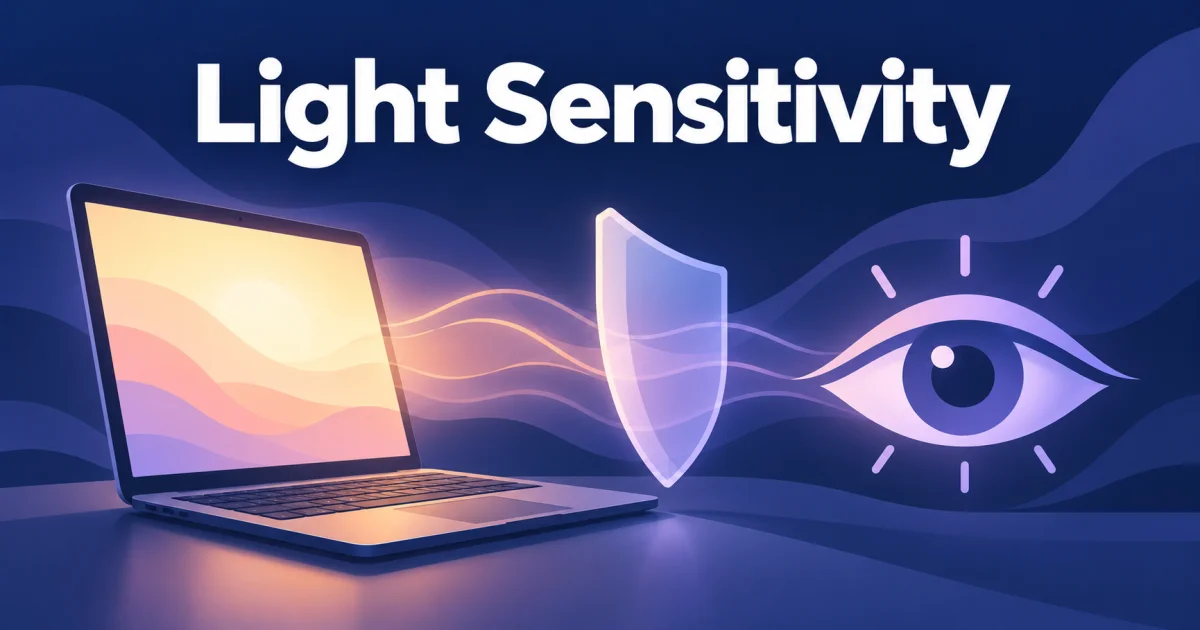
Migraine light sensitivity can make a normal office, supermarket, or phone screen feel painfully bright. The medical term is photophobia: unusual sensitivity or discomfort in response to light. It describes a symptom, not a fear of light or a diagnosis by itself.
Screens add another complication. Glare, prolonged near work, tired eyes, and migraine may overlap. Understanding which sensations you have can help you make useful adjustments and describe the problem clearly, without assuming that blue light explains everything.
What does migraine light sensitivity feel like?
Light may feel excessively bright, uncomfortable, or capable of worsening head pain. The experience can involve daylight and artificial lighting, rather than only screens.
The American Migraine Foundation's photophobia guide describes light sensitivity during attacks and also before or between them. It notes that eye conditions and other causes can produce photophobia, so persistent symptoms should not automatically be attributed to migraine.
Describe the sensation as specifically as you can. “My headache throbs more under the ceiling lights” is different from “my eyes burn after reading on a laptop.” Both deserve attention, but they suggest different questions.
Light-sensitive migraine does not require you to identify one offending color. In a laboratory study of light and migraine pain, participants responded differently to light of different colors, with green aggravating pain less than other tested colors. That finding helps investigate light processing. It does not prove that a particular lamp, screen setting, or pair of glasses will prevent attacks in everyday life.
How do photophobia, eye strain, and aura differ?
Photophobia concerns discomfort from light. Digital eye strain concerns symptoms associated with prolonged device use. Aura involves neurological symptoms, which can include visual changes. They are not interchangeable labels.
| Observation | A useful way to describe it | Next question |
|---|---|---|
| Light worsens headache or feels intolerable | Possible photophobia | Does it occur with other migraine symptoms? |
| Burning, dryness, or blur after near work | Possible digital eye discomfort | Are breaks helpful, and is an eye examination needed? |
| Zigzag patterns or flashing visual effects | Possible visual aura | Is this a known, assessed pattern or a new symptom? |
This table is a vocabulary aid, not a diagnostic checklist. The American Academy of Ophthalmology describes dryness, blurred vision, and headache with digital eye discomfort. Migraine and an eye problem can coexist.
Our migraine aura guide explains the visual and other symptoms that belong to aura. A first or unfamiliar visual disturbance deserves assessment; do not use a resemblance to an online description to diagnose it yourself.
Is blue light the main problem with screens?
It is too simple to blame screen discomfort on blue light alone. How you use a device, lighting conditions, and existing symptoms all deserve consideration.
The American Academy of Ophthalmology's digital-device guidance explains that prolonged screen use can reduce blinking and contribute to temporary discomfort. It does not identify blue light as the cause of ordinary digital eye strain. It also distinguishes evening light's effects on sleep timing from claims about damage to the eyes.
For migraine, laboratory findings about the response to different wavelengths do not settle which component of your workday matters. A bright screen in a dark room, reflections from a window, small text, and uninterrupted near work are different circumstances. Several may occur at once.
Record the situation rather than using a broad label such as “blue-light trigger.” For example: “After an hour of small-text work, my eyes felt dry; head pain started later.” That preserves the sequence for an eye-care or migraine conversation.
If evening screen use changes your sleep routine, also read sleep deprivation and migraine. A sleep-related concern should not be confused with proof that a lens filter treats migraine.
What is the evidence for blue-light glasses?
Blue-light filtering glasses are not established as a migraine-prevention treatment. Evidence about eye strain also offers limited support for the claims often made about them.
A double-masked randomized trial of 120 computer users compared blue-blocking and clear lenses during a computer task. The blue-blocking lenses did not improve the measured eye-strain outcomes relative to clear lenses.
A Cochrane review published in 2023 considered 17 trials and found that these lenses may offer no short-term advantage for computer-related visual fatigue. Sleep findings were uncertain. The review concerned visual performance, eye strain, and sleep; it should not be presented as a direct trial of migraine prevention.
Specialized migraine tints and ordinary commercial blue-light lenses are not necessarily the same product. If you are considering tinted lenses, discuss the intended symptom, fit, and limitations with an eye-care professional. Feeling more comfortable while wearing a lens is an observation worth recording, not proof that it prevents attacks.
Which screen and lighting adjustments are reasonable?
Start with changes that address the discomfort you notice. An adjustment should make the task easier, not create another difficult routine you must maintain.
The American Academy of Ophthalmology's practical advice includes taking regular distance-viewing breaks, reducing glare, and positioning the screen comfortably. These measures address eye strain; their use should not be described as proven migraine prevention.
Try one change at a time:
- Glare: reposition the screen or adjust a blind so a bright reflection no longer crosses the display.
- Brightness: choose a comfortable setting for the room instead of assuming the lowest setting is always best.
- Text: enlarge it so you do not need to lean toward the device to read.
- Breaks: look away at intervals and allow a pause when symptoms are building.
- Workplace lighting: describe the particular light or reflection that makes a task difficult and ask about an adjustment.
Dark mode may feel better for one person and make text harder to read for another. Treat it as a comfort option, not a migraine treatment. During an attack, a quieter, dimmer space may be useful, as discussed by the American Migraine Foundation.
How can you keep a useful light-sensitivity record?
Record symptoms and context before deciding that an exposure caused an attack. Include screen sessions or bright days without symptoms so the diary contains a comparison.
A short checklist is enough:
- Location and task, such as laptop work, supermarket visit, or outdoor travel.
- Lighting you noticed: glare, bright ceiling light, reflected sunlight, or screen brightness.
- Symptoms: eye discomfort, worsening head pain, nausea, or visual changes.
- Sequence: whether symptoms were already present before the exposure.
- Changes tried and what happened afterward.
- Other context, such as interrupted sleep or a missed break.
In a hypothetical example, two laptop sessions last the same length. One produces no symptoms. During the other, head pain was present before work began and increases with glare. That does not establish the laptop as an attack trigger; it raises a question about aggravation during an existing attack.
Use our migraine journal template to keep these notes concise. Calma can keep your migraine records together while you add observations about lighting and tasks. It cannot determine the cause of photophobia from an entry.
When should you get help?
Seek an assessment for persistent light sensitivity, repeated eye discomfort, or symptoms that affect work and daily activities. Bring specific descriptions and ask whether an eye examination, migraine assessment, or both would help.
Sudden vision loss, a sudden extremely severe headache, or new weakness or speech difficulty needs emergency assessment. NHS migraine guidance describes these warning signs. A known history of migraine does not make every new visual symptom an aura.
The migraine appointment guide can help you turn your notes into a short set of questions. The aim is to find a workable care and comfort plan, rather than a product that promises to block every attack.
Download on the App StoreFrequently Asked Questions
What is photophobia in migraine?
Photophobia is unusual sensitivity or discomfort in response to light. In migraine, light may worsen head pain or feel intolerable. It can occur before, during, or between attacks, and persistent symptoms deserve an assessment.
Are blue-light glasses proven to prevent migraine?
No. Evidence about blue-light filtering glasses does not establish that they prevent migraine attacks. Studies of computer-related eye strain have also found little or no short-term advantage over ordinary lenses.
How is light sensitivity different from aura?
Light sensitivity means that light feels uncomfortable or worsens symptoms. Visual aura involves neurological visual symptoms such as zigzag patterns or flashing lights. They can occur together, but they are not the same thing.
What should I try when screens feel uncomfortable?
Try reducing glare, adjusting brightness to a comfortable level, enlarging text, and taking regular visual breaks. Record what changes and seek an eye or migraine assessment if symptoms persist, rather than assuming blue light is the cause.
Sources
- American Migraine Foundation: Photophobia and Migraine
- Noseda and colleagues: Migraine photophobia and retinal pathways
- American Academy of Ophthalmology: Digital Devices and Your Eyes
- American Academy of Ophthalmology: Are Blue Light-Blocking Glasses Worth It?
- Singh and colleagues: Randomized trial of blue-blocking lenses and eye strain
- Cochrane: Blue-light filtering spectacle lenses
- NHS: Migraine
Related Articles

Caffeine and Migraine: Track Your Amount and Timing
Caffeine and migraine have a complex link. Learn how amount, timing, and withdrawal affect your diary, then track observations to discuss with a doctor.
Hormonal Migraine: Track Your Menstrual Cycle Pattern
Hormonal migraine can follow menstrual timing. Learn the cycle window, keep a practical symptom diary, and bring clearer questions to your doctor. Start today.
Migraine and Weather: Evidence, Patterns, and Planning
Explore the evidence on migraine and weather, learn what to record on headache-free days, and build a practical diary to discuss patterns with your doctor.