Can Stress Cause a Migraine? What the Research Shows
Stress is the most commonly reported migraine trigger. Learn the science behind stress-induced attacks and natural strategies to break the cycle before your next attack.
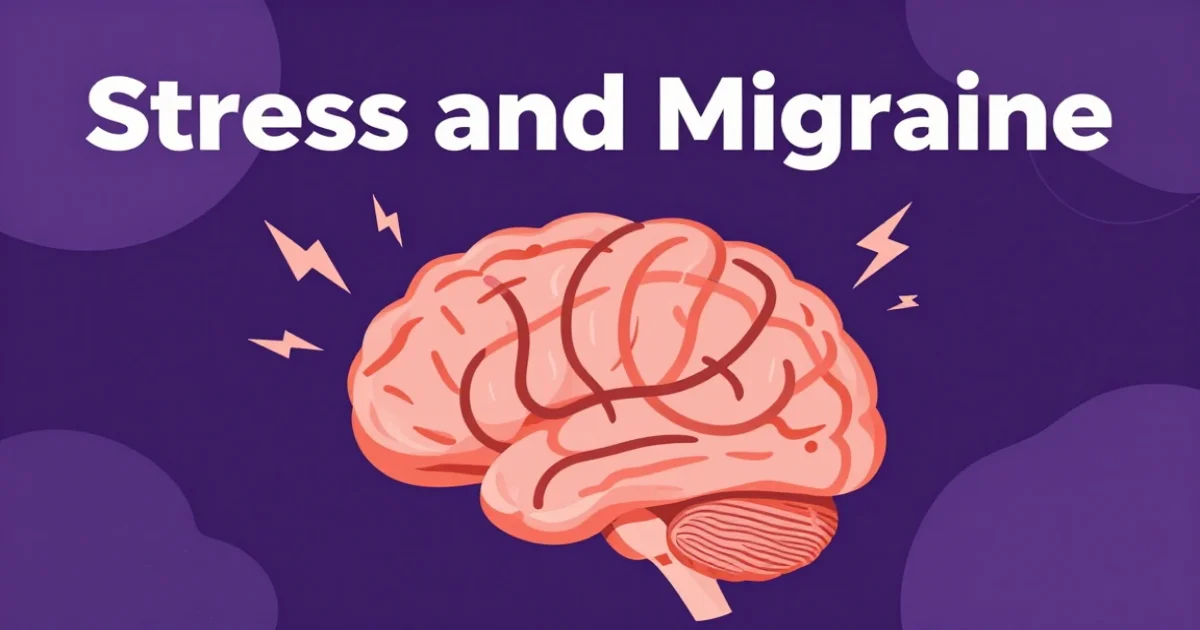
Can Stress Cause a Migraine? What the Research Shows
Stress is the single most commonly reported migraine trigger worldwide, and understanding exactly why can help you break the cycle before it starts. Whether your migraines cluster around deadlines, arguments, or the moment you finally exhale on a Friday evening, science has a detailed explanation for what is happening inside your brain and body.
Can Stress Really Cause a Migraine?
Yes. Stress is one of the most well-established migraine triggers, cited by a large majority of people who live with the condition. The relationship is bidirectional: stress provokes migraines, and migraines create more stress, forming a self-reinforcing cycle that clinicians call the stress-migraine loop.
According to the American Migraine Foundation, stress ranks as the number-one reported trigger across multiple large-scale patient surveys. The World Health Organization recognizes migraine as one of the leading causes of disability worldwide, and chronic stress is a key factor driving high attack frequency in many patients.
Many Calma users discover this pattern in their own data. Sarah, a Calma community member, told us: "I used to think my migraines were random. Then I started tracking and realized every single attack followed a high-stress week. Seeing the pattern laid out in my diary was a revelation."
Understanding your own triggers is a foundational step in any effective migraine management plan. For a broader look at what else might be setting off your attacks, see our guide on common migraine triggers.
The Biology: What Stress Does to Your Brain
Stress doesn't just feel bad. It creates measurable physiological changes that directly prime your brain for a migraine attack.
When you perceive a threat or stressor, your hypothalamus triggers the release of stress hormones, primarily cortisol and adrenaline, through the hypothalamic-pituitary-adrenal (HPA) axis. This cascade produces several effects that are particularly relevant to migraine.
Cortisol and inflammation. Cortisol is anti-inflammatory in the short term, but chronic or repeated stress exposure causes cortisol dysregulation, consequently promoting neuroinflammation. Research published through the National Institutes of Health has linked elevated inflammatory markers, including calcitonin gene-related peptide (CGRP), to both stress responses and migraine onset. CGRP is a neuropeptide that causes blood vessel dilation and is central to migraine pathophysiology.
Trigeminal nerve sensitization. Stress activates the trigeminal pain pathway, which is the primary pain-signaling system involved in migraine. Repeated stress lowers the activation threshold of this pathway. Over time, it takes less of a stimulus to trigger an attack.
Serotonin fluctuations. Acute stress causes a temporary spike in serotonin, followed by a drop. Because serotonin plays a regulatory role in pain modulation and blood vessel tone, this dip is thought to contribute to migraine initiation in susceptible individuals.
Muscle tension. Stress causes sustained contraction of the neck, shoulder, and scalp muscles. This can trigger or amplify head pain and feed into the migraine cascade.
Together, these mechanisms explain why stress is not just a vague lifestyle factor. It is a specific biological lever that shifts the migraine threshold in a vulnerable nervous system.
The Let-Down Effect: Why Migraines Hit When You Finally Relax
One of the most counterintuitive aspects of stress-related migraines is that they frequently do not arrive during the stressful period itself. Instead, they strike once the stressor is gone: on Saturday morning after a brutal work week, on the first day of a holiday, or the evening after a high-stakes presentation.
This phenomenon is called the stress let-down effect or weekend migraine. Research tracking daily stress levels and migraine onset found that a significant drop in stress after a period of elevated stress was associated with a markedly increased migraine risk in the following hours. The proposed mechanism involves a rapid fall in cortisol that removes its temporary vasoconstricting effect, allowing blood vessels to dilate quickly. This vasodilation is a known precursor to migraine pain.
This pattern matters because it means managing stress is not just about reducing peak stress loads. It is also about moderating abrupt transitions. Therefore, gradual wind-downs rather than hard stops on stressful work may reduce the amplitude of the let-down response.
Signs of Let-Down Effect vs. Acute Stress Response
If you have ever wondered whether your migraine came from being stressed or from suddenly not being stressed, this comparison may help clarify the pattern.
| Characteristic | Let-Down Effect Migraine | Acute Stress Migraine |
|---|---|---|
| Timing | 12-48 hours after stress ends | During or within 6-24 hours of stressor |
| Common context | Weekends, holidays, first day of vacation | High-pressure deadlines, arguments, emergencies |
| Cortisol pattern | Rapid drop from elevated levels | Sustained elevation during stress |
| Warning signs | Sense of relief, relaxation before attack | Building tension, irritability, neck stiffness |
| Frequency in Calma users | Frequently reported on Saturday mornings | Reported during or immediately after conflict |
Many Calma users notice they wake up with migraines on days off. By logging stress levels alongside sleep and attack data, they can see whether the pattern fits the let-down effect. Understanding why morning migraines occur can help distinguish this pattern from other causes. This distinction matters for prevention: someone prone to let-down migraines may benefit more from gradual relaxation techniques than from stress reduction alone.
Chronic Stress vs. Acute Stress: Is There a Difference?
Both types of stress can trigger migraines, but they tend to operate through slightly different mechanisms and time courses. However, both can be addressed with the right approach.
Acute stress is a sudden argument, a near-miss car accident, or an urgent deadline. It tends to trigger attacks within 6 to 24 hours via rapid hormonal and trigeminal activation. The let-down effect is particularly common after acute high-intensity stressors.
Chronic stress is sustained work pressure, relationship difficulties, financial worry, or caregiving demands. It is more insidious. It keeps the HPA axis in a state of low-level activation, gradually sensitizing the trigeminal system and reducing the threshold for attacks.
Chronic stress is strongly associated with episodic migraine progressing to chronic migraine, defined as 15 or more headache days per month. The Mayo Clinic identifies chronic stress as a significant contributor to migraine chronification, the process by which episodic migraine becomes chronic.
People living with chronic stress often notice that any additional trigger, a poor night of sleep, skipping a meal, a change in the weather, is enough to tip them into an attack. Consequently, their baseline threshold is already so low that smaller factors can push them over.
Recognizing the Stress-Migraine Cycle
The stress-migraine relationship is not a one-way street. Once you have a migraine, it generates its own stress. The disruption to your plans, the fear of the next attack, the anticipatory anxiety before important events. This anticipatory anxiety is itself a stressor. It can trigger the very attacks you are dreading, a phenomenon known as trigger anxiety.
Breaking this cycle requires awareness. Keeping a structured migraine diary is one of the most evidence-supported tools for identifying your personal stress-migraine patterns. When you can see in your own data that your attacks cluster after high-stress weeks or on Sunday mornings, the pattern becomes actionable rather than mysterious.
One Calma user described how tracking transformed her understanding: "I always knew I got migraines, but I never realized how closely mine tracked with stress until I saw the graph. Now I can see a stressful week coming and actually do something about it before I get hit."
Natural Approaches to Reducing Stress-Triggered Migraines
There are several well-studied, non-pharmacological strategies that address both the stress and the migraine sides of the equation. These approaches work best in combination and as part of a plan developed with a healthcare provider.
Regular Aerobic Exercise
Exercise is one of the most consistently effective natural interventions for both stress reduction and migraine prevention. Aerobic activity releases endorphins, reduces cortisol over time, and improves sleep quality. Moreover, studies reviewed by the American Migraine Foundation support regular moderate-intensity exercise, three to five sessions per week of 30 to 45 minutes, as a meaningful preventive strategy. Consistency matters more than intensity. Overexertion can itself become a trigger.
Mindfulness-Based Stress Reduction (MBSR)
MBSR is an 8-week structured program involving mindfulness meditation, body-scan practices, and gentle movement. Multiple clinical trials have shown it reduces both perceived stress and migraine frequency. Additionally, the mechanism appears to involve downregulation of the HPA axis response and reduced amygdala reactivity to stressors. This lowers the physiological burden on the trigeminal system.
Biofeedback Therapy
Biofeedback teaches you to consciously control physiological stress responses: heart rate, muscle tension, skin temperature. It uses real-time feedback from monitoring equipment. The Mayo Clinic recognizes it as an effective behavioral intervention for migraine prevention.
With practice, patients learn to recognize and interrupt the physical stress response before it escalates into a migraine.
Sleep Consistency
Both too little and too much sleep are known migraine triggers, and stress is one of the primary disruptors of sleep architecture. Maintaining a consistent sleep and wake time, even on weekends, stabilizes circadian rhythms and reduces cortisol variability. Understanding how sleep affects morning headaches is especially relevant for the let-down effect. Sleeping in dramatically on weekends can exacerbate the cortisol drop that precedes weekend migraines.
Pacing and Stress Management Techniques
Cognitive-behavioral therapy (CBT) has strong evidence for both stress management and migraine prevention. Specific techniques include scheduled worry time, activity pacing, and restructuring catastrophic thoughts about migraine.
Progressive muscle relaxation (PMR) is another accessible tool. Ten to 20 minutes of systematic muscle tensing and releasing has been shown to reduce both tension and migraine frequency.
Dietary and Lifestyle Regularity
Irregular meals, caffeine dependency, and dehydration all lower the migraine threshold. Stress makes each of these worse. Stress suppresses appetite, disrupts routines, and increases caffeine consumption.
Eating regular meals, staying well hydrated, and moderating caffeine intake, especially avoiding abrupt changes in consumption, can meaningfully reduce vulnerability during high-stress periods.
When to Consult a Doctor
If your migraines are occurring frequently, severely, or significantly affecting your quality of life, natural strategies alone may not be sufficient. A neurologist or headache specialist can assess whether preventive treatments are appropriate.
Do not self-diagnose or self-medicate. Seek professional evaluation if attacks are increasing in frequency or duration.
Tracking Stress as a Migraine Variable
One of the challenges with stress as a trigger is that it is subjective and often retrospectively reported. You may not realize how stressed you were until after the migraine hits.
Structured daily logging of stress levels alongside sleep, diet, and activity gives you objective data to work with over time. Calma is designed to make this kind of multi-variable tracking frictionless. The app helps you build a picture of your personal migraine patterns so you can bring meaningful data to your next medical appointment.
Understanding the stress-migraine connection puts you in a position of greater agency. Stress may be unavoidable, but its impact on your nervous system is not fixed. It is something you can influence, reduce, and, over time, interrupt before it reaches the point of an attack.
Download on the App StoreFrequently Asked Questions
Can stress directly cause a migraine?
Yes. Stress is one of the most commonly reported migraine triggers. It activates biological pathways including cortisol release and trigeminal nerve sensitization that lower the brain's threshold for an attack.
Why do migraines often hit after stress is over?
This is known as the "let-down" effect. When stress suddenly drops, cortisol levels fall rapidly, which can trigger vasodilation and inflammatory changes in the brain. Migraines that strike on weekends or the first day of vacation are a classic example of this pattern.
What natural approaches help prevent stress-related migraines?
Evidence-based natural strategies include regular aerobic exercise, consistent sleep schedules, mindfulness-based stress reduction (MBSR), biofeedback therapy, limiting caffeine, and keeping a migraine diary to identify personal stress patterns. Always consult a neurologist for a personalised plan.
How long after a stressful event can a migraine occur?
Research suggests that stress-triggered migraines most commonly begin within 6 to 24 hours of a significant stressor, though the "let-down" effect can delay onset by up to 48 hours after the stressful period ends.
Related Articles
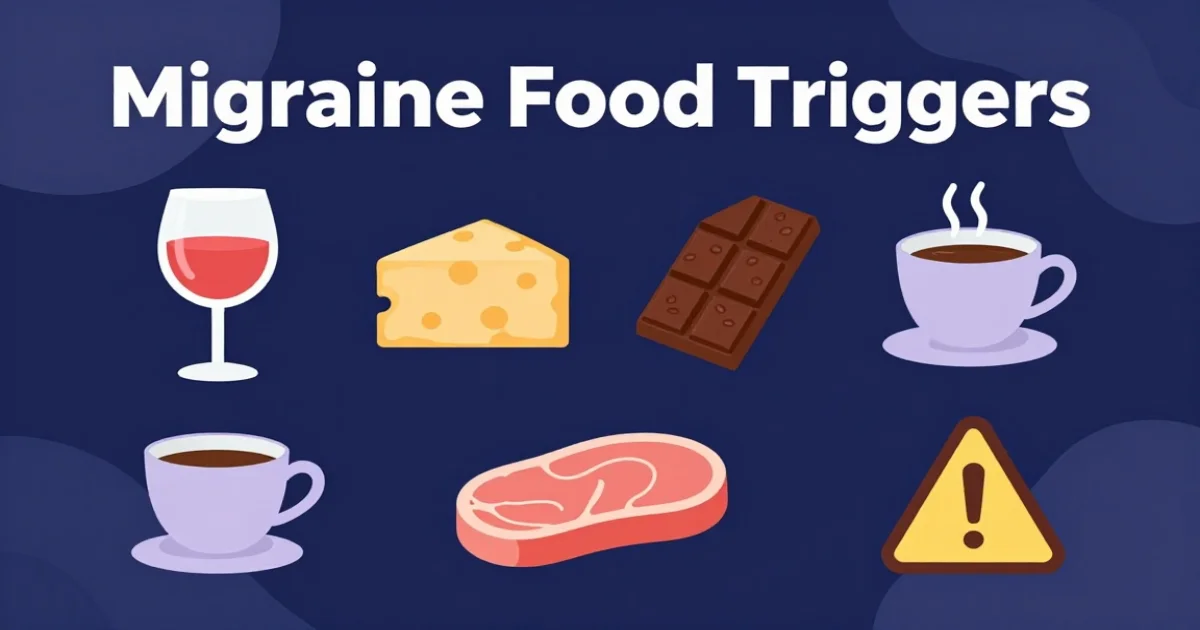
Migraine Food Triggers: What the Evidence Actually Says
62.5% of migraineurs avoid at least one food as a trigger. Learn which foods cause migraines, how they work, and how to find your real dietary triggers.
Waking Up With a Headache? 8 Causes and How to Stop It
Sleep apnea, dehydration, teeth grinding — find out what's causing your daily morning headache and how to wake up pain-free.
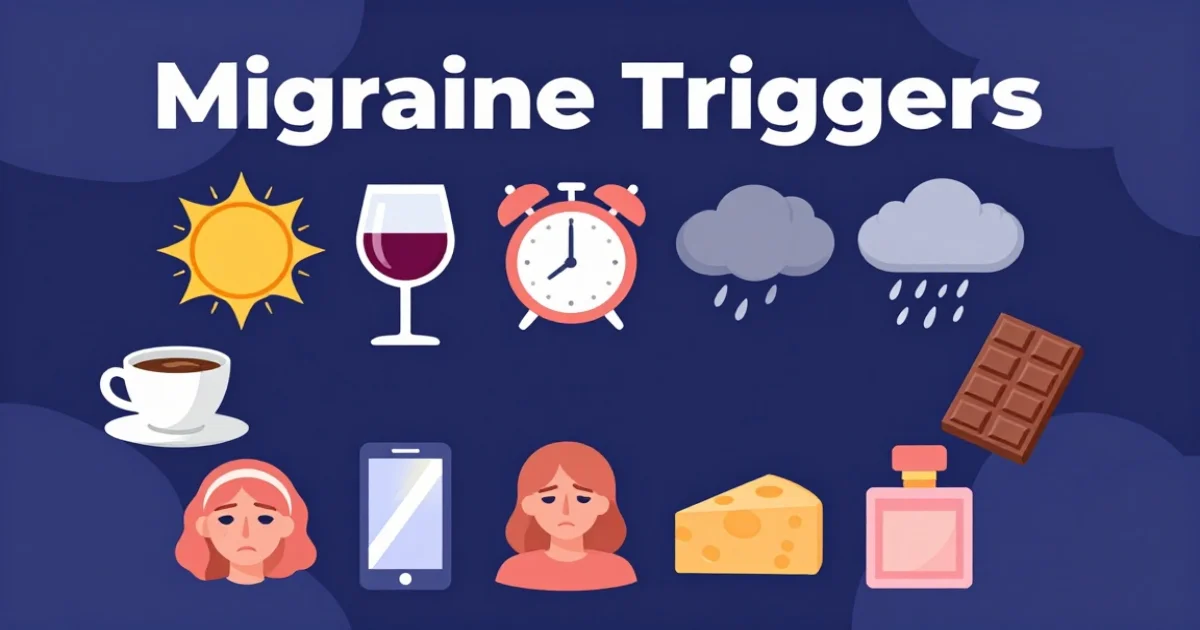
10 Most Common Migraine Triggers and How to Track Them
Stress, hormones, and weather are top migraine triggers. Learn to identify your personal triggers and reduce attack frequency by 30–50% with a tracking diary.