Migraine Food Triggers: What the Evidence Actually Says
Learn what evidence says about migraine food triggers, chocolate, caffeine, and elimination diets. Track patterns and avoid unnecessary food restrictions.
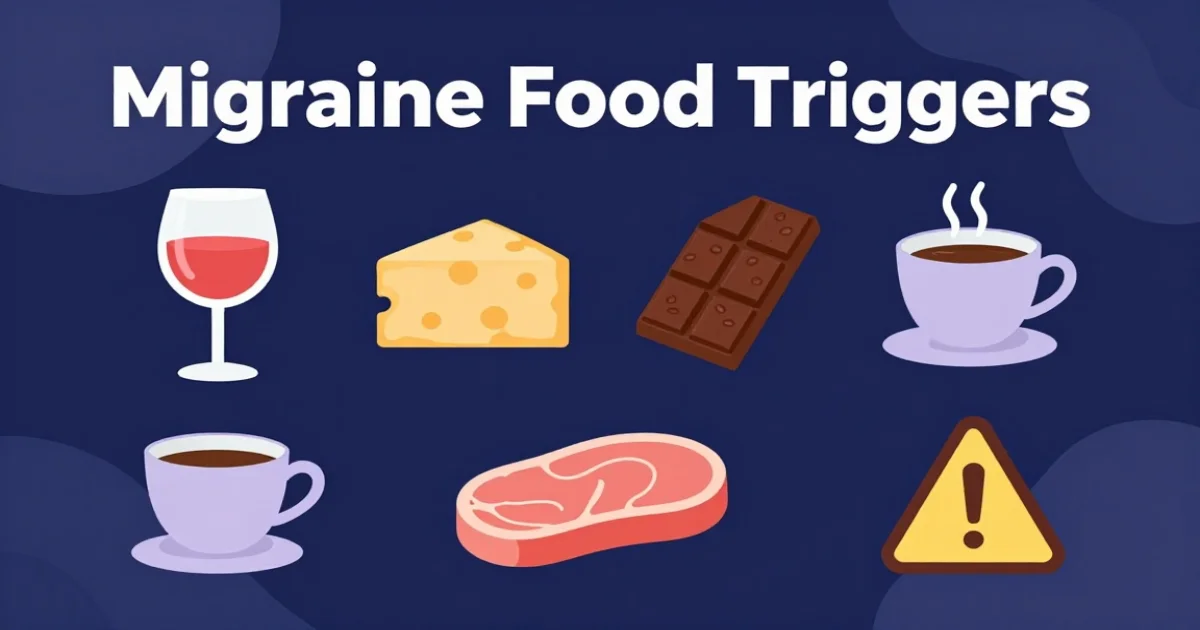
A list of migraine food triggers can leave you wondering whether there is anything safe to eat. The evidence is less straightforward than many lists suggest: a reported food association is not the same as a proven cause, and some people find no food triggers at all. Migraine is a neurological condition; a food trigger is a possible contributor to an attack, rather than the cause of migraine itself, as the Migraine Trust explains in its diet guidance.
What does the evidence say about food triggers?
Evidence for many commonly blamed foods is limited or inconsistent. Patient reports can identify useful questions, but they do not establish that a particular food causes attacks in most people.
The Migraine Trust reviews chocolate, cheese, citrus, caffeine, and additives and emphasizes that individual experiences differ. Do not turn a survey result into a personal probability: the proportion of study participants reporting a food is not the chance that eating it will cause your next attack.
It helps to ask what a claim actually measures. Was a food remembered after a headache, recorded before symptoms began, or tested under controlled conditions? Did the study account for how often people consumed it without symptoms? These are different kinds of evidence. A confident “trigger rate” without that context can be misleading.
Food also belongs in a broader picture. Our common migraine triggers guide explains why sleep, stress, and other changes deserve attention alongside diet.
Which foods and drinks are worth observing?
Observe items that repeatedly seem relevant to your own symptoms, rather than treating a standard list as a diet prescription. The following table separates reported associations from useful questions to bring to a clinician.
| Food or drink | What to keep in mind | A useful observation |
|---|---|---|
| Chocolate | A craving may be an early symptom; direct trigger evidence is uncertain | Did the craving or other unusual symptoms begin before you ate it? |
| Coffee, tea, or cola | Caffeine changes and withdrawal can complicate the picture | Was the amount or timing different from usual? |
| Aged cheese or cured foods | Suggested chemical mechanisms do not prove a trigger for everyone | Does the association recur, and do you also eat it without symptoms? |
| Alcohol | Some people report a link, but context varies | What else changed during the same occasion? |
| Foods with additives | Evidence and individual responses differ | Can you describe the food and portion rather than assuming the ingredient? |
Alcohol, caffeine withdrawal, chocolate, processed meats, and some additives appear among the reported associations in the American Migraine Foundation's diet overview. That does not make them universally unsafe.
For caffeine specifically, record drinks consistently before drawing conclusions. Our caffeine and migraine guide looks at intake, timing, and withdrawal without treating coffee as a simple yes-or-no trigger.
Monosodium glutamate, or MSG, is often singled out. The FDA considers added MSG generally recognized as safe and notes that studies have not consistently reproduced reactions in people reporting sensitivity. This does not settle every individual's experience, but it does not support declaring MSG a universal migraine cause.
Could a food craving be an early migraine symptom?
Yes. A craving can occur during the prodrome, the early phase of a migraine attack, before headache pain begins. Eating afterward may therefore be a response to the attack rather than its cause.
The Migraine Trust's prodrome guide describes food cravings alongside changes such as tiredness, yawning, mood changes, and neck stiffness. A timeline can help you describe that sequence to a clinician.
For example, a hypothetical record might say: “Unusually tired before lunch; craving sweets later; ate chocolate; headache in the evening.” This is more informative than recording only “chocolate trigger.” It also leaves room for other explanations.
You do not need to decide the answer while writing an entry. Keep “what I ate,” “what I noticed,” and “what I suspect” separate. That makes it easier to revise your interpretation as more information becomes available.
How can you track a suspected food association?
Keep brief observations that allow comparisons across occasions. A useful record includes both what happened before an attack and what happened when the same food was not followed by symptoms.
Try this practical approach:
- Choose one question. For example, “Does this drink seem relevant when my routine is otherwise typical?” is more manageable than monitoring every ingredient.
- Record the food clearly. Include the approximate portion and time, without trying to calculate every nutrient.
- Record the earliest symptom. Note a craving, unusual sensitivity, or other change separately from head pain.
- Add a few contextual details. Sleep, skipped meals, stress, and menstrual timing can complicate interpretation.
- Review repeated experiences. A single memorable headache is a reason to observe, not proof of a trigger.
- Bring the question to your clinician. Decide together whether a focused change is worth considering.
For a structured entry, see our migraine journal guide. If logging food makes you anxious or becomes burdensome, simplify the record or stop and discuss a different approach. The purpose is useful information, not constant surveillance of every meal.
Should you eliminate a suspected food?
A focused change may be reasonable to discuss when an association repeats, but broad elimination is a poor starting point. The American Migraine Foundation advises testing foods individually and cautions against prolonged, widespread restriction.
Before changing your diet, ask what would count as useful evidence and when to review the result. Consider what will replace the food, whether other changes could obscure the comparison, and whether the plan is realistic in your daily life. A quieter month alone does not show that an eliminated food was responsible.
Involve a clinician or registered dietitian before excluding whole food groups. Additional support is especially important for children, pregnancy, nutritional concerns, or a history of restrictive eating. Do not deliberately re-expose yourself to a food linked to a suspected or diagnosed allergic reaction as a migraine experiment.
If you have no repeatable food association, that is a valid outcome. There is no requirement to discover a dietary trigger before receiving migraine care.
Can IgG food testing identify migraine triggers?
Commercial IgG food panels do not provide an established test for migraine triggers. They should not be used to create a long avoidance list on the assumption that every positive result indicates a harmful food.
The American Academy of Allergy, Asthma & Immunology recommends against IgG testing for food allergies or intolerances. It explains that these antibodies may reflect normal food exposure or tolerance, rather than a damaging reaction.
That distinction matters even when a website quotes a small study of an antibody-guided diet. A study finding does not establish a commercially available panel as a validated diagnostic tool. If food-related symptoms concern you, a clinician can consider whether allergy, a digestive condition, or another issue needs appropriate assessment.
What is a useful starting point beyond avoiding foods?
Regular meals, adequate hydration, and a balanced diet are more practical foundations than a growing list of forbidden foods. They belong within a care plan that also considers sleep, activity, stress, and clinical treatment.
The NHS migraine guidance includes regular mealtimes and hydration among self-care measures. Discuss recurring symptoms with a clinician rather than assuming diet alone will resolve them. Our migraine diary benefits guide explains how records can support that conversation.
If vomiting leaves you with signs of dehydration, such as much less urine or persistent dizziness on standing, seek urgent medical advice; NHS dehydration guidance explains these warning signs. Sudden severe headache or new sudden neurological symptoms require emergency assessment, as described in the American Migraine Foundation's emergency guidance.
Calma can help you record attacks and organize notes about possible patterns. Use those observations to support a conversation with your clinician, rather than as an automated diagnosis of a food sensitivity.
Download on the App StoreFrequently Asked Questions
Which foods can trigger migraine?
Some people report associations with alcohol, caffeine changes, chocolate, aged cheese, or particular additives. Evidence varies, and no food-trigger list applies to everyone. Regular meals and individual observation are more useful than automatically avoiding every suspected food.
Is chocolate always a migraine trigger?
No. Evidence that chocolate directly triggers attacks is uncertain, and a craving for it may be an early migraine symptom. If you notice a pattern, record when the craving and other symptoms began rather than assuming the food caused the attack.
Should I try an elimination diet for migraine?
Discuss a repeated suspected food association with a clinician or registered dietitian before making major restrictions. A focused, supervised change may be considered, but broad elimination can make the pattern harder to interpret and reduce nutritional variety.
Can an IgG food test identify my migraine triggers?
IgG food panels are not established tests for migraine triggers. Allergy specialists recommend against using them to diagnose food allergies or intolerances because food-specific IgG may reflect normal exposure or tolerance rather than a harmful reaction.
How can I tell whether food is affecting my attacks?
Keep brief notes on meals, drinks, early symptoms, headache timing, and other circumstances such as sleep or stress. Compare repeated experiences, including symptom-free days when practical. Share the observations with your clinician; a diary alone cannot prove causation.
Sources
- The Migraine Trust. Migraine and diet.
- American Migraine Foundation. Living With Migraine: Diet and Migraine.
- U.S. Food and Drug Administration. Questions and Answers on Monosodium glutamate.
- The Migraine Trust. Prodrome: Spotting the first signs of a migraine attack.
- American Academy of Allergy, Asthma & Immunology. The Myth of IgG Food Panel Testing.
- NHS. Migraine.
- NHS. Dehydration.
- American Migraine Foundation. Migraine in the Emergency Department.
Related Articles
Can Stress Cause a Migraine? What the Research Shows
Stress is the most commonly reported migraine trigger. Learn the science behind stress-induced attacks and natural strategies to break the cycle before your next attack.
10 Common Migraine Triggers and How to Track Yours
Learn 10 common migraine triggers, how warning symptoms can confuse the picture, and how to track your personal patterns without unnecessary restrictions.

Caffeine and Migraine: Track Your Amount and Timing
Caffeine and migraine have a complex link. Learn how amount, timing, and withdrawal affect your diary, then track observations to discuss with a doctor.