How Long Does a Migraine Last? What's Normal vs. Concerning
Migraines last 4–72 hours, but the full attack cycle including prodrome and postdrome can stretch 1–3 days. Learn what's normal, what's a warning sign, and how to track.
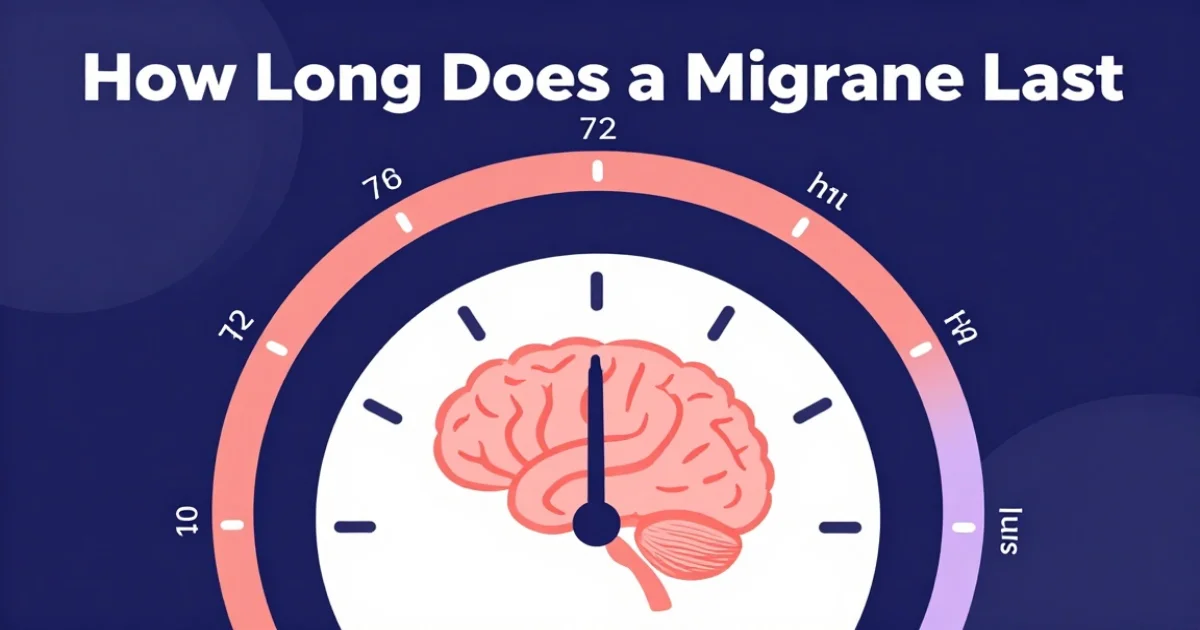
Migraine is one of the most disabling neurological conditions documented by health organizations worldwide, affecting hundreds of millions of people. The question on everyone's mind: how long does a migraine last?
The answer depends on which part of the episode you are measuring and who you are asking about. The headache stage alone typically runs 4 to 72 hours. When you account for all four stages, a single flare can consume one to three days of your life. Understanding this timeline and knowing when something feels wrong is one of the most practical skills in migraine management.
What Are the Four Stages of a Migraine Attack?
Migraine is far more than a headache. It is a neurological event unfolding in up to four distinct stages, each with its own symptoms and timeline. Recognizing these stages helps you understand the total time a migraine can claim from your week.
Phase 1: Prodrome (Hours to Days Before)
The prodrome, sometimes called the premonitory stage, arrives before head pain appears. It can begin a few hours or even two full days before the headache kicks in. According to the American Migraine Foundation, up to 77% of people with migraine experience these warning signs.
In tracking data from Calma users, many report recognizing prodrome symptoms only in retrospect, after months of consistent logging. Common signals include unexplained mood shifts, food cravings, neck stiffness, excessive yawning, and fatigue. Some people notice heightened sensitivity to light or sound well before any pain develops.
Learning to recognize your personal prodrome signals is powerful. It gives you time to prepare, adjust plans, and sometimes even intervene early enough to reduce severity.
Phase 2: Aura (Up to 60 Minutes)
Aura affects roughly 25 to 30% of people who experience migraines, according to the National Institute of Neurological Disorders and Stroke. It usually lasts 5 to 60 minutes and involves reversible neurological symptoms that precede or accompany the headache.
Visual disturbances dominate. Zigzag lines, flashing lights, blind spots, and tunnel vision all fall under this category. Some people experience non-visual symptoms instead: tingling in the face or hands, speech difficulties, or temporary weakness.
If you encounter these symptoms for the first time, especially numbness or speech changes, seek medical evaluation promptly to rule out other neurological conditions.
Phase 3: Headache Phase (4 to 72 Hours)
This is the phase most people mean when they ask about migraine duration. The headache stage spans 4 to 72 hours in adults, though children often have shorter flares. Mayo Clinic describes the pain as typically one-sided, throbbing, and moderate to severe, worsening with routine physical activity.
Nausea frequently accompanies this phase. Calma users who log attacks consistently report that nausea intensity does not always correlate with headache severity. Some mild headaches bring severe nausea, while intense pain sometimes occurs with minimal stomach upset.
Other common symptoms include extreme sensitivity to light and sound, smell sensitivity, and difficulty concentrating. The duration of this stage varies wildly. Factors such as sleep deprivation, hormonal shifts, dehydration, and stress can all push it toward the longer end of the spectrum.
Phase 4: Postdrome (Up to 48 Hours)
The postdrome, sometimes called the migraine hangover, follows head pain resolution and can linger up to 48 hours. The headache is gone, but many people feel exhausted, mentally foggy, or emotionally raw. Some describe it as feeling genuinely ill.
Fatigue, difficulty focusing, mild light sensitivity, low mood, and muscle aches are typical during this recovery period. The sudden relief of pain can be deceptive. You might feel ready to resume normal activities, only to crash within hours.
Accounting for postdrome is essential when calculating the true impact of a migraine on your life. It explains why even a relatively short headache can derail an entire weekend.
How Long Does Each Migraine Phase Last?
| Phase | Typical Duration | Key Symptoms |
|---|---|---|
| Prodrome | 2 hours to 2 days | Mood changes, food cravings, neck stiffness, yawning, fatigue |
| Aura | 5 to 60 minutes | Visual disturbances (zigzag lines, blind spots), tingling, speech changes |
| Headache | 4 to 72 hours | One-sided throbbing pain, nausea, light/sound sensitivity, concentration difficulty |
| Postdrome | Up to 48 hours | Fatigue, brain fog, mild sensitivity, muscle aches, emotional sensitivity |
How Long Does a Full Migraine Attack Last From Start to Finish?
Add all four stages together, and a single migraine episode can last anywhere from a few hours to more than five days. The headache alone takes 4 to 72 hours. Add a possible 48-hour prodrome and a 48-hour postdrome, and a single flare realistically consumes three to five days.
The American Migraine Foundation notes that migraine ranks among the leading causes of disability worldwide. This ranking reflects the full attack cycle, not just the hours spent in pain. The invisible time spent in prodrome and postdrome erodes productivity, plans, and quality of life just as surely.
For those experiencing 15 or more headache days per month, with at least eight meeting migraine criteria, chronic migraine may be the diagnosis. The World Health Organization classifies this as a condition warranting dedicated neurological care.
What Is a Normal Migraine Duration vs. When Should You Be Concerned?
Most migraines fall comfortably within the 4 to 72 hour window for the headache stage. Full attack cycles extending to five days also fall within normal variation. Knowing these ranges helps you recognize when something requires medical attention.
Normal Duration Range
- Headache stage: 4 to 72 hours
- Full attack cycle (all stages combined): 1 to 5 days
- Postdrome lingering fatigue: up to 48 hours after pain resolves
When to Seek Help
Certain patterns fall outside typical migraine behavior and merit prompt medical evaluation.
Duration exceeding 72 hours. A headache meeting migraine criteria that persists beyond 72 hours without a pain-free interval qualifies as status migrainosus. The National Institutes of Health identifies this as serious, often requiring medical intervention to break the cycle. Do not wait past three days without contacting a healthcare provider.
New or changed headache patterns. A sudden "worst headache of your life," a thunderclap onset, or a headache accompanied by fever, stiff neck, vision changes, weakness, or speech difficulties warrants emergency evaluation to rule out stroke, meningitis, or other urgent conditions.
Frequent attacks disrupting life. More than four migraines per month, or attacks consistently lasting beyond 24 hours, suggests your current management approach needs reassessment. A neurologist can help build a plan addressing both frequency and duration.
Why Do Some Migraines Last Hours While Others Last Days?
Multiple factors influence how long any individual flare persists. Understanding them creates opportunities for meaningful improvement.
Sleep. Disrupted sleep amplifies both migraine frequency and duration. Poor sleep quality or irregular schedules correlate with longer, more intense attacks. The connection between sleep and morning migraines is well-documented. If you regularly wake with a migraine, your sleep environment or schedule may be contributing. Our guide to why you wake up with a headache covers this connection in detail.
Hydration. Dehydration reliably triggers migraines and may extend attack duration. Mayo Clinic recommends adequate fluid intake as a basic management strategy. Drinking water at the earliest sign of a flare is simple and low-risk.
Stress and the let-down effect. Chronic stress produces longer, more frequent migraines. Counterintuitively, the relaxation period after intense stress also triggers attacks. The weekend following a demanding work week commonly brings migraine flares. Stress management practices moderate this pattern over time and may reduce both attack frequency and duration.
Hormonal fluctuations. Menstrual migraines correlate with hormonal shifts during the menstrual cycle. These are often longer and more resistant to treatment than other types. Tracking your cycle alongside attacks reveals whether timing patterns exist.
Early intervention timing. Responding at the first warning sign, before the headache intensifies, may reduce both severity and duration. Waiting until pain peaks typically makes the flare harder to shorten.
How Does Tracking Attack Duration Help You Manage Migraines?
Recording detailed information about each attack, including duration at every stage, reveals patterns invisible in the moment. You begin to see whether your flares are lengthening over time, whether certain triggers correlate with extended episodes, and whether your management strategies actually work.
In tracking data from Calma users, those who consistently log phase durations report that their clinical appointments become more productive. They arrive with objective records instead of fuzzy memories. Doctors appreciate concrete data. Treatment adjustments become more targeted.
Consistent tracking also gives your neurologist something to work with beyond recollection, which tends to distort timeframes in unpredictable ways. Migraine diary benefits extend beyond personal insight to fundamentally improve the quality of medical care you receive. A detailed migraine diary can cut your attack frequency and helps your doctor build a more effective treatment plan.
Calma supports this kind of detailed tracking. Logging attack start and end times, stage transitions, symptom intensity, and potential triggers builds a clear picture of your personal migraine timeline over weeks and months.
What Natural Approaches Can Shorten a Migraine?
Lifestyle strategies can complement professional medical care. They rarely replace it, but they do add meaningful support.
Cold or warm compresses. A cold pack on the forehead or neck provides comfort during the headache stage. Some people prefer warmth on tense shoulder muscles. Experimenting early in an attack helps you discover what works for your body.
Dark, quiet rest. Light and sound sensitivity define migraine. A dark, quiet room removes these amplifiers and may shorten the headache stage. Our step-by-step guide to how to stop a migraine covers this technique and other evidence-based approaches in detail.
Hydration. Water or electrolyte fluids at the first sign of a flare align with migraine management guidelines. This is low-risk and consistently recommended.
Caffeine with caution. Small caffeine amounts may relieve early headache symptoms for some people. However, regular caffeine use and caffeine withdrawal both trigger migraines. This is highly individual. Discuss it with your doctor.
Stress reduction practices. Breathing exercises, progressive muscle relaxation, or simply stepping away from a stressful environment during an attack may moderate duration. These also serve as preventive strategies between flares.
Sleep. Many people find that sleeping through the headache stage shortens the overall episode. Creating a rest-friendly environment supports this response.
For frequent, severe, or persistently long migraines, a neurologist can evaluate whether preventive medications or other interventions suit your situation.
How Do You Understand Your Own Migraine Timeline?
Every person's migraine experience differs. The 4 to 72 hour window for the headache stage contains enormous individual variation. Some people's flares resolve in under 12 hours with early intervention. Others regularly experience two-day headache stages regardless of what they try.
The goal is not to match an average. It is to understand your own pattern, recognize when something falls outside your norm, identify what lengthens or shortens your episodes, and communicate clearly with your healthcare team about what you experience.
If you have not yet explored how migraine differs from other headache types, our overview provides foundational context. Understanding why migraine behaves differently from tension headache explains why it demands different management strategies.
The more you learn about your personal attack arc, the better you can work with a doctor to reduce migraine's grip on your life.
Download on the App StoreFrequently Asked Questions
How long does a typical migraine last?
A typical migraine headache stage lasts between 4 and 72 hours. When you include all four stages, the full attack cycle spans 1 to 3 days or longer. Individual experiences vary based on neurology, triggers, and how early the flare is addressed.
What does it mean if my migraine lasts more than 72 hours?
A migraine exceeding 72 hours is classified as status migrainosus and requires medical evaluation. Contact a healthcare provider if head pain persists beyond three days without meaningful relief. This condition can arise spontaneously or following overuse of certain headache treatments.
Why do some migraines last only a few hours while others last days?
Duration varies based on individual neurology, trigger type and intensity, sleep quality, stress levels, hormonal fluctuations, and whether the episode is identified and treated early. The same person can experience attacks of widely different lengths depending on circumstances. Tracking across several months is the most reliable way to understand what drives duration variation in your specific case.
Can you shorten how long a migraine lasts?
Acting at the earliest sign, resting in a dark quiet room, applying cold compresses, staying hydrated, and avoiding known triggers may reduce duration for some people. Consistent sleep, stress management, and hydration between attacks can lower overall severity over time. For persistent or severe migraines, working with a neurologist on a personalized management plan offers the most effective path toward shorter, less frequent attacks.
Related Articles
Migraine vs Tension Headache: How to Tell the Difference
40% of adults experience headaches. Migraine and tension headache need different treatments. Learn the 5 key differences, how to tell them apart, and when to see a doctor.
What Is Migraine Aura? Symptoms, Types, and What to Do
Migraine aura affects 25-30% of people with migraine. Learn what aura symptoms feel like, the types, why they happen, and when to seek medical advice.
How to Get Rid of a Headache: Natural Methods That Work
40% of adults experience headaches. Most respond to natural treatment. Learn proven methods to relieve headache pain fast without medication.