Vestibular Migraine: Symptoms, Triggers, and Management
Vestibular migraine affects 1–3% of people, causing dizziness and vertigo often without any headache. Learn the symptoms, triggers, and lifestyle strategies that help.
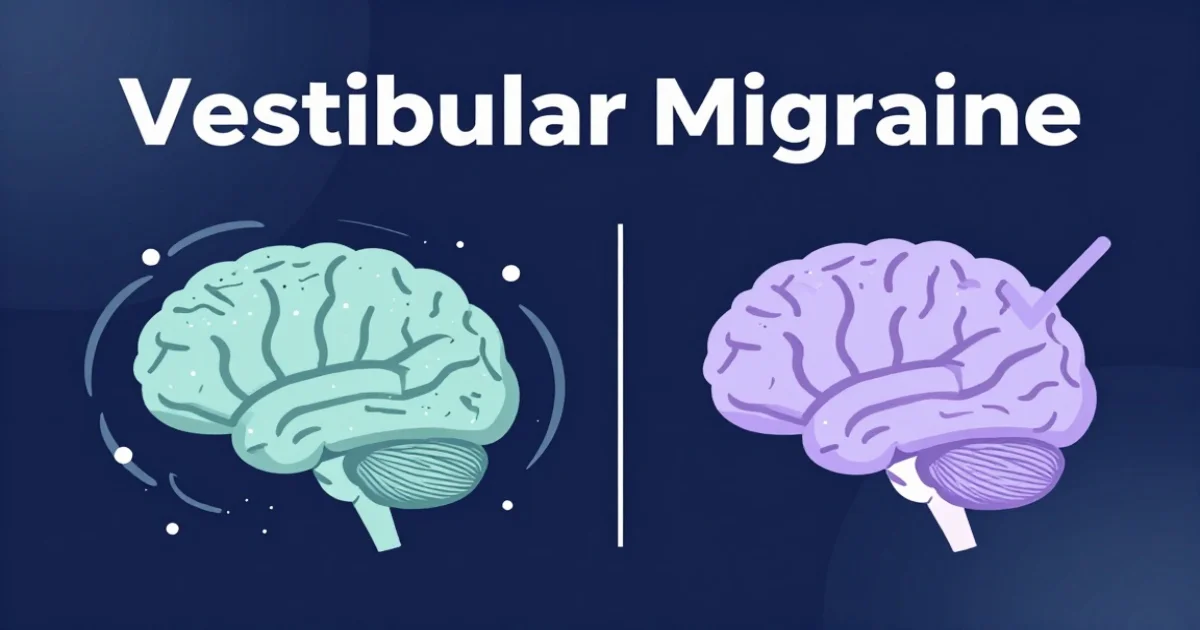
Vestibular Migraine: Symptoms, Triggers, and Management
Imagine the room spinning, your balance suddenly unreliable, a wave of nausea rising. Yet there is no headache. For millions of people, this is the confusing reality of vestibular migraine, one of the most under-recognised conditions in neurology. Vestibular migraine is a neurological disorder where the brain's migraine process disrupts the vestibular system, the network responsible for balance and spatial orientation, producing episodes of dizziness and vertigo that can last minutes to days.
Unlike classic migraine, which is defined by throbbing head pain, vestibular migraine often strikes without any pain at all. This disconnect leads many sufferers to spend years cycling through ENT specialists, cardiologists, and emergency departments before receiving an accurate diagnosis. Understanding this condition is the first step toward managing it effectively.
What Is Vestibular Migraine and How Common Is It?
Vestibular migraine is a variant of migraine that primarily affects the vestibular system, causing episodes of dizziness and balance disturbance rather than or in addition to classic head pain. The International Headache Society recognises it as a distinct diagnostic entity, defined by a history of migraine combined with recurrent vestibular episodes lasting between 5 minutes and 72 hours.
It is estimated to affect approximately 1–3% of the general population, making it one of the most common causes of spontaneous vertigo, according to data cited by the National Institutes of Health. Among people with an existing migraine history, prevalence is considerably higher. Women are disproportionately affected, consistent with the broader pattern seen across all migraine subtypes.
Despite its prevalence, vestibular migraine remains widely misdiagnosed. The absence of headache in many episodes, combined with overlapping features with conditions such as Ménière's disease, benign paroxysmal positional vertigo (BPPV), and anxiety disorders, makes accurate identification a genuine clinical challenge.
What Are the Symptoms of Vestibular Migraine?
Vestibular migraine produces a distinctive cluster of symptoms centred on balance and spatial perception, often accompanied by sensory sensitivities familiar to anyone who experiences classic migraine. The most defining feature is vestibular disturbance, including spinning vertigo, a sense of swaying or rocking, imbalance, or a feeling that the environment is moving.
Core vestibular symptoms include:
- Spontaneous vertigo. A false sense of spinning or movement, either of the self or the surroundings, occurring without any obvious trigger
- Positional vertigo. Dizziness that worsens with changes in head position, such as rolling over in bed or looking up
- Visual vertigo. Dizziness triggered or worsened by moving visual environments, such as traffic, scrolling screens, or busy patterns
- Head motion intolerance. Nausea or disorientation provoked by ordinary head movements
- Unsteadiness and balance problems. A persistent difficulty walking steadily, particularly in low-light environments or on uneven surfaces
Alongside these vestibular symptoms, people commonly experience sensitivity to light and sound, nausea, sometimes vomiting, a feeling of fullness or pressure in the ears, visual aura such as zigzag lines or blind spots, and brain fog with difficulty concentrating during and after episodes. Headache is present in only a portion of episodes, and many vestibular migraine attacks occur without any headache at all, according to the American Migraine Foundation.
The duration of episodes is notably variable. A single vestibular migraine attack can last anywhere from a few minutes to several days. This range helps distinguish it from BPPV, where episodes last seconds, and from Ménière's disease, which follows a longer and more progressive course.
How Is Vestibular Migraine Different From Classic Migraine?
Vestibular migraine and classic migraine share the same underlying neurological mechanism. Cortical spreading depression and trigeminal nerve sensitisation drive both conditions. However, they differ significantly in their primary symptom expression. In classic migraine, head pain dominates. In vestibular migraine, balance disruption takes centre stage, and pain is secondary or absent entirely.
This distinction matters enormously for people who have been told they do not have migraines because their episodes do not produce the expected headache. The American Migraine Foundation emphasises that migraine is a spectrum disorder and that headache is only one of many possible expressions of the underlying neurological dysfunction.
People with vestibular migraine also tend to experience a longer interictal period, the time between attacks, during which subtle balance difficulties, motion sensitivity, and cognitive fog may persist. This low-grade background instability can significantly impair daily function even when discrete episodes are not occurring. Migraine brain fog is a related phenomenon affecting many people between attacks.
What Triggers a Vestibular Migraine Episode?
The triggers for vestibular migraine largely overlap with those for classic migraine, though motion-related and visual stimuli tend to be particularly potent. Understanding and tracking your personal triggers is one of the most evidence-supported strategies for reducing attack frequency.
Common vestibular migraine triggers include:
Sleep disruption. Both insufficient sleep and oversleeping destabilise the brain's threshold for migraine. Maintaining a consistent sleep schedule is one of the most reliable protective habits. Our users frequently report that even a single late night can trigger a vestibular episode the following day. Sleep and morning headaches are closely connected — our guide to waking up with headaches covers this link in detail.
Hormonal fluctuations. Many women notice vestibular episodes clustering around menstruation, perimenopause, or hormonal medication changes. This mirrors the pattern seen in menstrual migraine.
Dietary factors. Aged cheeses, processed meats, alcohol, caffeine (especially withdrawal), and artificial sweeteners are common dietary triggers. Skipping meals and dehydration are equally important to avoid.
Stress and anxiety. Psychological stress is among the most cited triggers. Paradoxically, the let-down period after stress, such as a weekend after a demanding work week, can be equally provocative. Stress is a documented migraine trigger and managing it is one of the most effective preventive strategies available.
Sensory overload. Bright, flickering, or fluorescent lights, loud environments, strong perfumes, chemical odours, and busy visual patterns can all precipitate an episode.
Motion and visual stimulation. Scrolling on screens, riding in vehicles, and watching fast-moving video content are particularly problematic for people with vestibular migraine due to the visual-vestibular mismatch they create.
Weather and barometric pressure changes. Rapid shifts in atmospheric pressure, temperature, or humidity are frequently reported as triggers, particularly in people who live in highly variable climates.
Identifying which of these applies to you requires consistent, systematic observation. Our post on common migraine triggers covers the full landscape of trigger types in detail, including the research behind each.
How Does Vestibular Migraine Differ From BPPV and Ménière's Disease?
Understanding how vestibular migraine compares to similar conditions can help you describe your symptoms more accurately to a doctor.
| Condition | Key Feature | Headache Present | Duration |
|---|---|---|---|
| Vestibular migraine | Vertigo and balance disruption with migraine history | In 50% of episodes | 5 min to 72 hours |
| BPPV | Brief vertigo triggered by head position changes | No | Seconds per episode |
| Ménière's disease | Vertigo with hearing loss and tinnitus | No | 20 min to 24 hours |
| Vestibular neuritis | Prolonged vertigo following viral illness | No | Days to weeks |
| Vestibular migraine without headache | Vestibular symptoms only, no pain | Never | 5 min to 72 hours |
How Is Vestibular Migraine Diagnosed?
Vestibular migraine is a clinical diagnosis with no confirmatory laboratory test or imaging finding. A neurologist or otolaryngologist evaluates the diagnosis using criteria established by the International Headache Society and the Barany Society, which require all of the following:
- At least five episodes of vestibular symptoms of moderate or severe intensity, lasting 5 minutes to 72 hours
- A current or past history of migraine with or without aura
- One or more migraine features present during at least 50% of vestibular episodes: headache, photophobia, phonophobia, or visual aura
- Symptoms not better explained by another vestibular diagnosis
Arriving at this diagnosis typically involves ruling out alternative causes of vertigo, including BPPV, which is treated with repositioning manoeuvres, Ménière's disease, which is associated with progressive hearing loss and tinnitus, vestibular neuritis, which is typically a single prolonged episode following a viral illness, and central causes such as cerebellar stroke.
Keeping a detailed symptom diary significantly accelerates this process. When you bring objective data, episode timing, duration, associated symptoms, and suspected triggers, to your appointment, your clinician can identify patterns that would otherwise take months of guesswork to uncover. Migraine diary benefits documented in research make this one of the most impactful steps you can take before your first specialist appointment.
What Lifestyle Strategies Help Manage Vestibular Migraine?
Vestibular migraine management is built on the same pillars as classic migraine prevention, with additional attention to vestibular-specific strategies. The goal is to reduce the frequency and severity of episodes through consistent lifestyle habits that lower overall neurological excitability.
Establish a Consistent Daily Routine
The migraine brain is exceptionally sensitive to irregularity. Waking and sleeping at the same time every day, including weekends, is one of the highest-yield habits for any migraine type. Sleep disruption is a particularly potent trigger for vestibular migraine. Calma users who maintain sleep consistency often report fewer episodes within weeks.
Stay Hydrated
Dehydration lowers the migraine threshold significantly. Aim for consistent fluid intake throughout the day rather than compensating with large amounts at once. Keep a water bottle visible at your desk as a simple reminder.
Eat Regular Meals
Skipping meals causes blood sugar fluctuations that can destabilise the brainstem. Three balanced meals at consistent times, supplemented with snacks if needed, provide a stable metabolic foundation for neurological stability.
Manage Screen Time and Visual Load
Reduce prolonged exposure to scrolling feeds, fast-paced video, and high-refresh displays during vulnerable periods. Take regular breaks using the 20-20-20 rule, every 20 minutes look at something 20 feet away for 20 seconds. Consider screen filters that reduce blue light and flicker. Many Calma users find that reducing evening screen time has a measurable impact on episode frequency.
Practise Stress Regulation
Techniques with evidence for migraine reduction include mindfulness meditation, diaphragmatic breathing, progressive muscle relaxation, and regular aerobic exercise. The key is consistency. Occasional practice provides limited benefit compared to daily habits. Even five minutes of diaphragmatic breathing each morning can shift your baseline reactivity over time.
Try Vestibular Rehabilitation
For people with significant balance problems between episodes, a physiotherapist trained in vestibular rehabilitation can provide exercises that recalibrate the brain's use of vestibular, visual, and proprioceptive signals. This is particularly helpful for managing the low-grade unsteadiness many people experience chronically.
Limit Known Dietary Triggers
While not every person responds to food triggers, a structured elimination approach, removing suspected foods for four to six weeks and noting any change in episode frequency, can be informative. Caffeine deserves particular attention. Both excess consumption and abrupt withdrawal are common triggers for vestibular migraine specifically. For the detailed mechanisms behind how tyramine, histamine, and caffeine interact with migraine, see the guide to vestibular migraine dietary triggers.
Track Systematically
The connection between behaviour and vestibular episodes is rarely obvious in the moment. It typically becomes visible only when data is reviewed across weeks or months. Apps like Calma make it straightforward to log episodes, potential triggers, sleep, and stress in one place. This helps you and your doctor identify patterns that would otherwise remain hidden.
For persistent or frequent episodes, always consult a neurologist or otolaryngologist. Medical treatments for vestibular migraine prevention exist and can be discussed with your clinician based on your individual history and needs.
When Should You See a Doctor for Vestibular Migraine?
While lifestyle management forms the foundation of vestibular migraine care, there are circumstances where prompt medical evaluation is essential. Seek urgent care if vestibular symptoms are accompanied by sudden severe headache unlike any previous experience, neurological symptoms such as weakness, slurred speech, vision loss, or difficulty walking, or if a first episode of vertigo lasts more than 24 hours without a prior diagnosis.
These features may indicate a more serious underlying cause, including cerebellar stroke or other central nervous system event, that requires immediate assessment. Once serious causes have been excluded and a vestibular migraine diagnosis is established, an ongoing relationship with a neurologist allows you to monitor your pattern and adjust your management approach over time.
Understanding how migraine differs from other types of headache is also useful context. It helps clarify why vestibular migraine belongs in the same treatment framework as other migraine types despite its unusual symptom profile.
Can You Live Well With Vestibular Migraine?
A vestibular migraine diagnosis is not a sentence to a life of unpredictable dizziness. Many people achieve substantial improvement, fewer episodes, shorter duration, and less severity, through consistent application of the lifestyle strategies outlined above combined with appropriate medical support.
The critical ingredient is knowledge. Knowing your triggers, knowing the early warning signs of an impending episode, and knowing which strategies help you recover most efficiently. This knowledge is built through systematic observation over time, not through guesswork or memory alone.
If you are navigating vestibular migraine and have not yet started tracking your episodes in a structured way, beginning that process is the single most impactful first step you can take. Calma is designed specifically for this purpose. It helps you see the patterns that lead to better conversations with your doctor and, ultimately, to fewer days derailed by dizziness.
Download on the App StoreFrequently Asked Questions
Can you have vestibular migraine without a headache?
Yes. Many vestibular migraine episodes occur without any headache at all. The defining feature is vestibular symptoms, dizziness, vertigo, or balance problems, which can appear independently of head pain. This is why diagnosis often takes years and why many people see multiple specialists before receiving the correct diagnosis.
How is vestibular migraine diagnosed?
There is no single test for vestibular migraine. Diagnosis is clinical, based on a history of at least five episodes of vestibular symptoms lasting 5 minutes to 72 hours, a current or past migraine history, and ruling out other vestibular disorders. A neurologist or otolaryngologist typically makes the diagnosis after a detailed history and examination.
What triggers vestibular migraine?
Common triggers include sleep disruption, hormonal changes especially around menstruation, bright or flickering lights, stress, certain foods and drinks, strong odours, and rapid changes in head position. Triggers are highly individual, which is why systematic tracking is essential for identifying your personal pattern.
Is vestibular migraine a lifelong condition?
Vestibular migraine is often a chronic condition, but many people achieve significant improvement with consistent trigger management, lifestyle adjustments, and appropriate medical support. Episodes can become less frequent and less severe over time with the right approach.
Related Articles
What Is Migraine Aura? Symptoms, Types, and What to Do
Migraine aura affects 25-30% of people with migraine. Learn what aura symptoms feel like, the types, why they happen, and when to seek medical advice.
What Triggers a Silent Migraine? Causes and Management
Discover silent migraine triggers, how they differ from regular migraines, and natural management strategies to reduce attacks. Start tracking with Calma today.
Migraine vs Tension Headache: How to Tell the Difference
40% of adults experience headaches. Migraine and tension headache need different treatments. Learn the 5 key differences, how to tell them apart, and when to see a doctor.