Vestibular Migraine Triggers: Common Causes and How to Find Yours
Over 75% of migraine patients identify triggers through tracking. Discover the most common vestibular migraine triggers and find your personal patterns with a detailed diary.
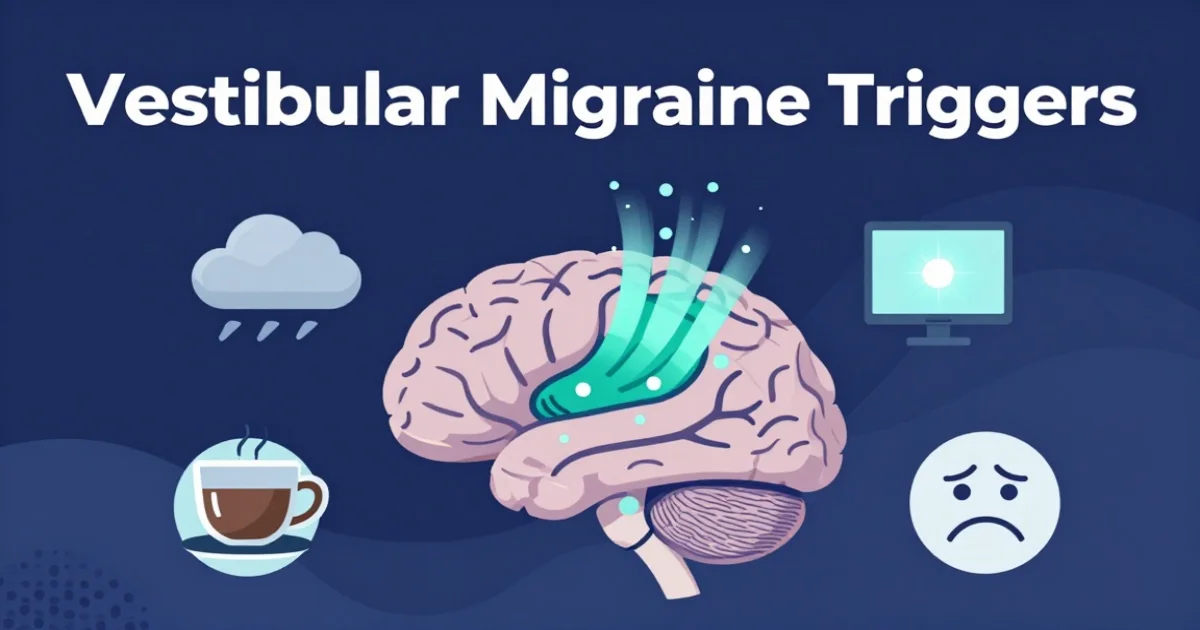
Vestibular migraine is one of the most underdiagnosed and misunderstood conditions in neurology. Unlike classic migraine, which announces itself with throbbing head pain, VM often arrives with dizziness, vertigo, and balance problems that can strike without any headache at all. This makes identifying triggers both challenging and especially important.
If you experience recurrent dizziness or vertigo linked to migraine, or if you suspect your balance problems have a migraine basis, understanding what sets off your episodes is one of the most powerful steps you can take. Fewer attacks and a better quality of life are realistic goals, but they start with knowing your personal trigger profile.
What Is Vestibular Migraine and Who Does It Affect?
Vestibular migraine affects roughly 1-3% of the general population, making it one of the most common causes of spontaneous vertigo in adults, according to the American Migraine Foundation. The condition occurs when the brain's migraine mechanism disrupts the vestibular system: the network of structures responsible for balance, spatial orientation, and eye movement. The result is recurring dizziness, vertigo, unsteadiness, or nausea lasting anywhere from minutes to several days.
The condition is distinct from classic migraine in its primary symptoms. Classic migraine centres on head pain. VM centres on balance and spatial perception. The World Health Organization lists headache disorders among the most prevalent neurological conditions worldwide, yet this particular variant remains significantly underrecognised in clinical practice. Women are disproportionately affected, a pattern consistent across all migraine subtypes.
How Do Vestibular Migraine Triggers Differ From Classic Migraine Triggers?
VM shares the same neurological basis as classic migraine, so the triggers largely overlap. The vestibular component, however, adds a heightened sensitivity to motion and visual input that is more pronounced than in the classic form. Understanding these distinctions shapes how you manage the condition day to day.
| Trigger Category | Classic Migraine | Vestibular Migraine (VM) |
|---|---|---|
| Stress | Major trigger; attack often follows a stressful period | Same pattern; let-down effect especially common |
| Sleep disruption | Both too little and too much sleep provoke attacks | Equally potent; irregular schedules particularly problematic |
| Hormonal changes | Estrogen drops at menstruation are a key trigger | Same; perimenopause often intensifies vestibular episodes |
| Diet and alcohol | Tyramine, nitrites, alcohol, caffeine, fasting | Identical triggers; dehydration lowers threshold further |
| Bright and flickering light | Common sensory trigger | Common; plus busy visual patterns trigger vestibular symptoms |
| Motion and visual stimuli | Rarely a standalone trigger | Strong standalone trigger: scrolling, vehicle travel, moving crowds |
| Weather changes | Barometric pressure shifts frequently reported | Equally reported; may interact with inner ear fluid dynamics |
| Strong odors | Perfumes and chemicals can provoke attacks | Same sensitivity; sometimes heightened during active episodes |
Classic migraine triggers such as stress, certain foods, and hormonal fluctuations affect both forms equally. But triggers involving head movement, visual motion, and sensory mismatch are particularly potent for VM. Scrolling on a phone, riding in a car, or walking through a crowded space can provoke an attack not because of cognitive strain, but because of the vestibular demands placed on the brain.
Our guide to common migraine triggers covers the full landscape of factors that affect migraine brain sensitivity.
Does Sleep Really Trigger Vestibular Episodes?
Sleep disruption is one of the most consistently reported triggers for VM, and the relationship runs in both directions. Too little sleep and too much sleep can both precipitate an attack. Irregular sleep patterns appear to be especially problematic, even when total sleep hours look reasonable on paper.
The mechanism involves brainstem nuclei that regulate both sleep and migraine activity. Disrupted sleep alters the threshold for cortical spreading depression, the neurological wave underlying migraine aura and vestibular sensitisation. Shift workers, people with insomnia, and those who sleep late on weekends after a week of early alarms are particularly vulnerable to this pattern.
Waking and sleeping at the same time every day, including weekends, is one of the most evidence-supported preventive steps for this condition. Clinical research on migraine and sleep suggests that even a one-hour variance from your usual wake time can be enough to provoke an attack in susceptible individuals. It sounds strict, but many people find the consistency pays off quickly.
How Do Hormonal Changes Trigger Attacks?
Hormonal fluctuations are a major driver for many people with VM, particularly women. The estrogen drop before and during menstruation is a well-documented migraine trigger. For people with vestibular symptoms, this shift can provoke vertigo and balance problems alongside, or completely independent of, head pain.
Perimenopause, pregnancy, and hormonal medication changes (including starting, stopping, or switching contraceptives) are also commonly reported trigger windows. The relationship between estrogen and the vestibular system is not fully understood. Clinical observations and patient surveys, however, consistently identify hormonal transitions as high-risk periods.
Many Calma users report that their vestibular episodes cluster predictably in the three to four days before menstruation. Logging cycle phase alongside episode data is often the first step toward seeing that pattern clearly. Many users describe this as a turning point in feeling like they finally understand their own condition.
If you notice attacks clustering around specific points in your cycle, or following hormonal medication changes, discuss the pattern with your doctor. Hormonal tracking is a valuable addition to any symptom diary, and your healthcare provider may have options for reducing the frequency of these hormonal-transition episodes.
What Foods and Drinks Trigger Vestibular Symptoms?
Certain foods and beverages are well-established migraine triggers, and for VM, they operate through the same mechanisms. Common dietary triggers include aged cheeses and processed meats (which contain tyramine and nitrites), alcoholic beverages (particularly red wine and beer), caffeine in both excess and withdrawal, and artificial sweeteners such as aspartame.
Skipping meals is equally important to address. Prolonged fasting lowers blood glucose, which can precipitate both head pain and vestibular symptoms in susceptible people. The Mayo Clinic notes that dietary triggers are highly individual: no single food is a universal trigger for everyone with migraine.
Keeping a food diary alongside your symptom log is the most reliable way to find your personal dietary triggers. Remove suspected foods for four to six weeks, then reintroduce them systematically while monitoring for changes in episode frequency. This structured elimination approach is far more informative than ad hoc avoidance.
Why Does Stress Sometimes Trigger Attacks Days Later?
Psychological stress is one of the most frequently reported triggers across all migraine subtypes, and vestibular attacks are no exception. The timing pattern, however, catches many people off guard. Understanding it can genuinely change how you manage your schedule.
Calma users who actively track stress levels alongside episode timing report that their attacks most often arrive 12-36 hours after a stressful peak, rather than during the stressful period itself. This "let-down" delay makes the connection easy to miss without a diary.
Clinicians call this the "let-down" effect. An attack arrives during the relaxation period following sustained stress. A demanding work week followed by a quiet weekend, or the first days of a holiday after a high-pressure stretch, are classic trigger windows. It is often not the stress itself but its sudden removal that tips the brain into an episode.
Managing stress is therefore not just about reducing exposure to demanding situations. It is equally about maintaining consistency during transitions. Mindfulness practices, regular aerobic exercise, and diaphragmatic breathing have the strongest evidence base among non-pharmacological approaches, according to the American Migraine Foundation. Our post on stress and migraine covers the neuroscience of this trigger in more depth.
Do Lights, Sounds, and Strong Smells Trigger Vestibular Migraine?
Sensory stimuli are potent triggers for both classic migraine and VM, but this condition adds a layer of visual sensitivity that goes beyond simple light avoidance. Bright or flickering lights, loud sounds, strong perfumes, and chemical odours can all precipitate vestibular symptoms.
For VM specifically, busy visual patterns (striped surfaces, moving crowds, high-contrast environments) can be particularly provocative. This is sometimes called visual vertigo. It reflects the vestibular system's dependence on stable visual input for spatial orientation. When the visual environment is chaotic or overwhelming, the migraine brain struggles to reconcile the conflicting signals.
Reducing sensory load during vulnerable periods is practical and effective. Options include wearing sunglasses outdoors, avoiding fluorescent or flickering indoor lighting, stepping away from visually busy spaces, and limiting screen time on high-risk days. Screen filters, blue-light reduction settings, and regular screen breaks are steps that many people with vestibular sensitivity find helpful.
Why Is Motion a Specific Trigger for Vestibular Migraine?
Motion-triggered attacks are a hallmark of this condition and a key feature distinguishing it from classic migraine. Riding in vehicles, scrolling on screens, watching fast-moving video content, and sometimes even ordinary head movements can provoke an episode when the vestibular system is sensitised.
The mechanism is sensory conflict. Your brain receives motion signals from the inner ear, the eyes, and body position sensors that don't align. The migraine brain responds by triggering an attack. This same mismatch is what makes some people prone to motion sickness, which is itself linked to migraine susceptibility.
Practical strategies include taking breaks from screen scrolling every 15-20 minutes, sitting in the front seat of vehicles rather than the back, and working with a physiotherapist trained in vestibular rehabilitation. Vestibular rehab exercises, performed consistently over several weeks, can meaningfully reduce motion sensitivity. They work by gradually recalibrating the brain's response to motion signals.
Do Weather Changes Trigger Vestibular Episodes?
Rapid barometric pressure changes, temperature swings, and humidity fluctuations are among the most frequently reported environmental triggers for migraine. VM appears equally sensitive to these atmospheric shifts, with storm systems, altitude changes, and seasonal transitions being particularly problematic for many people.
One theory suggests that barometric pressure changes directly affect inner ear fluid dynamics. This creates a physical stimulus that interacts with an already sensitised vestibular system. People living in climates with highly variable weather patterns often report noticeably higher episode frequency during unsettled periods.
You cannot control the weather. You can, however, use forecast awareness to take preventive action during high-risk windows. Staying well-hydrated, avoiding known triggers during barometric shifts, and building in extra rest during weather transitions are practical steps that carry real benefit.
How Do You Identify Your Personal Triggers?
Identifying your specific triggers requires systematic observation over weeks, not memory of individual episodes. The connection between a trigger and an attack is rarely obvious in the moment. It typically becomes visible only when data is reviewed across a longer window, and that requires a record.
The most effective approach is a structured episode diary. Log each attack alongside potential precipitants from the preceding 24-48 hours. Key variables to record: sleep quality and duration, stress levels, meals and hydration, hormonal status (for women), weather conditions, screen time and visual environment, and any significant head motion or vehicle travel.
Users who bring Calma tracking records to their neurology appointments consistently report that specialists find them far more useful than verbal symptom descriptions. One common pattern: what felt like "random" episodes became clearly linked to sleep variance once six weeks of data were reviewed side by side.
Most people need six to eight weeks of consistent tracking before reliable patterns emerge. The longer and more detailed your record, the more accurately you and your doctor can separate genuine triggers from coincidences. Our post on the benefits of keeping a migraine diary explains why systematic tracking is one of the most evidence-supported interventions for any migraine type.
Brain fog during or after vestibular attacks can also affect how well you remember episodes, which is another reason contemporaneous logging matters. Our article on migraine and brain fog covers why memory and cognition are affected during these episodes.
What Natural Approaches Help Build Vestibular Migraine Trigger Resilience?
Since many vestibular triggers are unavoidable (no one can eliminate stress or control the weather), management appropriately focuses on raising the brain's overall attack threshold. The goal is not zero trigger exposure. It is a brain that responds to triggers with less severity and less frequency.
Consistent hydration and regular meals are foundational. Dehydration and blood glucose fluctuations both lower the migraine threshold, making other triggers more likely to tip the balance. Regular aerobic exercise (30 minutes of moderate activity most days) has solid evidence for reducing migraine frequency and severity across all subtypes.
Vestibular rehabilitation, under the guidance of a specialist physiotherapist, can reduce baseline motion sensitivity and improve balance between episodes. Mindfulness-based stress reduction and progressive muscle relaxation have good evidence for reducing stress-triggered attacks. Together, these approaches work by raising the brain's baseline threshold. When a trigger arrives, it is less likely to push the brain into a full attack.
Understanding how migraine differs from other headache types provides useful context for why these lifestyle strategies work differently for VM than for tension-type headache.
When Should You See a Doctor for Vestibular Migraine Triggers?
Trigger management is powerful, but it is not a substitute for professional medical evaluation. See a neurologist or otolaryngologist if you experience recurrent vertigo without a clear diagnosis, if your episodes are increasing in frequency or severity, or if vestibular symptoms are significantly disrupting daily life.
It is important to rule out other causes of vertigo that may coexist with or mimic VM. These include benign paroxysmal positional vertigo (BPPV), Ménière's disease, vestibular neuritis, and in rare cases, central nervous system conditions. A specialist can differentiate between these using clinical history, examination, and targeted investigations.
If you experience sudden severe headache, weakness, double vision, slurred speech, or difficulty walking during a first episode, seek urgent medical attention to exclude stroke. Once a diagnosis is confirmed, ongoing follow-up allows your management plan to evolve as your pattern changes over time.
Download on the App StoreFrequently Asked Questions
What is the most common trigger for vestibular migraine?
There is no single most common trigger for everyone. Vestibular migraine triggers are highly individual. Sleep disruption, stress, and hormonal changes are among the most frequently reported triggers across clinical studies and patient surveys.
Can weather changes trigger vestibular migraine?
Yes. Barometric pressure changes, temperature shifts, and humidity fluctuations are among the most frequently reported environmental triggers for VM, particularly in people with existing migraine history. These weather-related triggers are also well-documented for classic migraine.
How do I identify my personal vestibular migraine triggers?
The most reliable method is systematic tracking: logging each episode alongside potential triggers such as sleep, stress, diet, weather, and hormonal changes. Over 75% of people with migraine can identify at least one trigger through careful observation, according to the American Migraine Foundation.
Are vestibular migraine triggers different from regular migraine triggers?
They largely overlap, but VM triggers tend to include more motion-related and visual stimuli due to the involvement of the vestibular system. Screen scrolling, vehicle travel, and busy visual environments are more specifically problematic for people with VM than for those with classic migraine.
Related Articles
What Triggers a Silent Migraine? Causes and Management
Discover silent migraine triggers, how they differ from regular migraines, and natural management strategies to reduce attacks. Start tracking with Calma today.
What Is Migraine Aura? Symptoms, Types, and What to Do
Migraine aura affects 25-30% of people with migraine. Learn what aura symptoms feel like, the types, why they happen, and when to seek medical advice.

Migraine Food Triggers: What the Evidence Actually Says
62.5% of migraineurs avoid at least one food as a trigger. Learn which foods cause migraines, how they work, and how to find your real dietary triggers.